
What Information to Put on a Pet ID Tag
Published Updated

By Silas Payao
Writer and editor focusing on clear steps for new dog and cat owners.
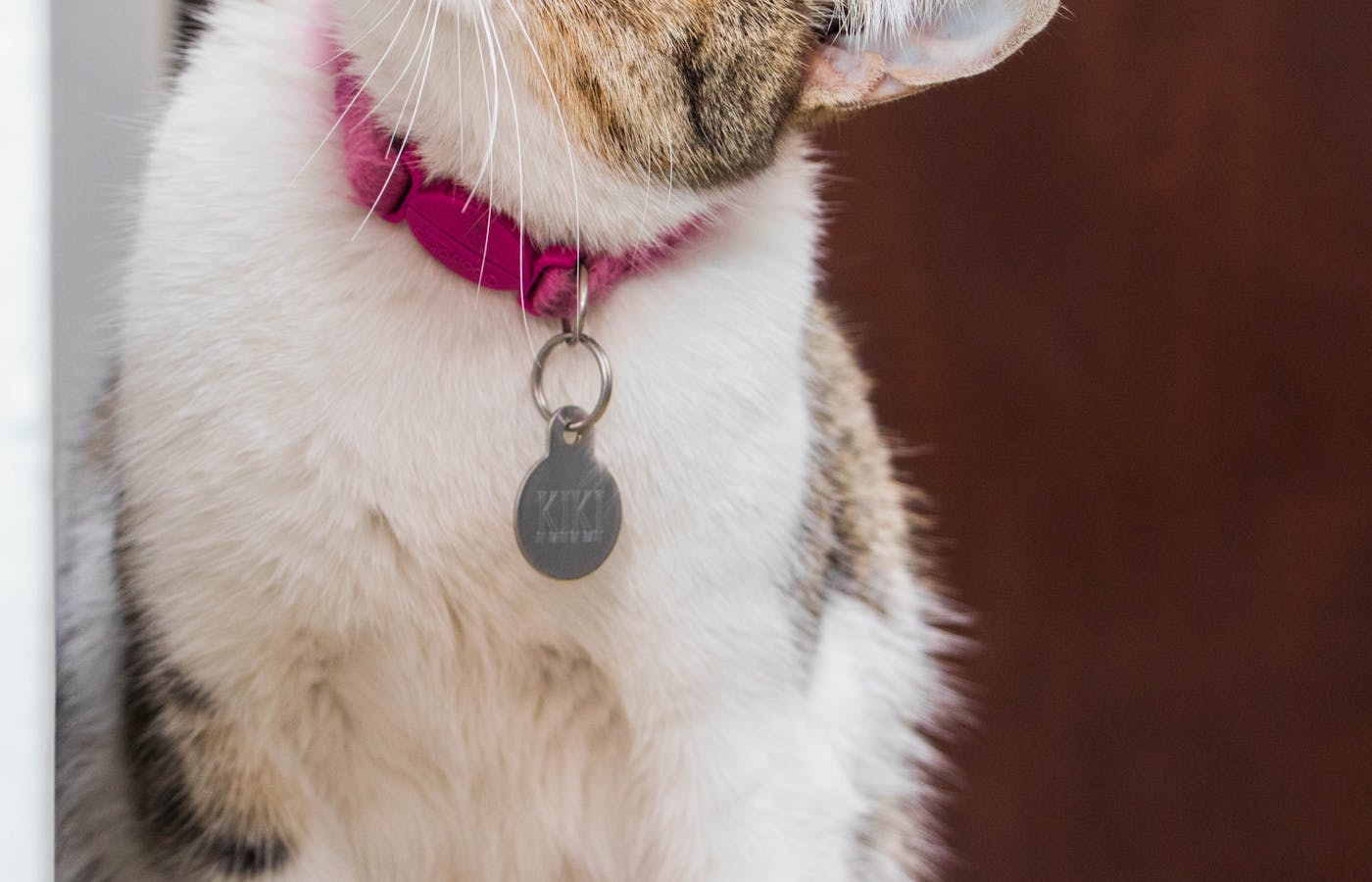
A pet ID tag is small, but it can carry the first useful clue when a dog slips through a gate or a cat gets outside. The person who finds a lost pet may not have a scanner, a carrier, or much time. A readable tag gives them a simple next step.
Veterinary clinics and shelters can scan microchips, but a visible tag can work before the pet reaches a scanner. The best setup uses both: a current microchip registration and a tag with enough information for a fast, safe call.
Knowing what information to put on a pet ID tag is not just about filling every line. The best tag balances contact details, privacy, medical needs, and readability so a stranger can help quickly without needing to solve a puzzle.
A useful tag should answer three questions: who should be contacted first, how can they be reached, and is there anything urgent the finder needs to know before help arrives.
Put the fastest contact method first
The most important line on a pet ID tag is usually a phone number. If someone finds your pet, calling or texting should be easier than searching online, checking social media, or guessing which neighbor might know the animal. Use the number most likely to be answered quickly.
If two adults share care, choose the person who usually keeps their phone nearby. A second number can be helpful if the tag has enough space, but the first number should be the most reliable. Avoid using an old landline or a phone that often stays on silent.
Think about text messages too. Some finders may feel nervous calling a stranger, but they may be willing to send a photo and location by text. A mobile number gives them that option. If your pet is often with a sitter, make sure the sitter knows which number is on the tag.
Keep the number easy to read. Small decorative fonts, crowded layouts, or worn engraving can make the most important detail hard to use. A simple tag is safer than a pretty tag nobody can read under stress.
Decide whether your pet’s name belongs on the tag
Putting a pet’s name on the tag can help a kind finder speak calmly to the animal. It may also make a scared pet feel more familiar if someone needs to coax them away from traffic, a porch, or a parking lot. For friendly pets, the name can be useful.
Some owners prefer not to include the pet’s name for privacy or security reasons. That is a reasonable choice, especially for pets who are very social with strangers. If you skip the name, the tag can still work well with a clear phone number and a simple message such as call my family.
The decision depends on your pet’s behavior and your comfort level. A shy indoor cat may benefit from a gentle name cue. A dog who happily follows anyone might need a tag focused more on contact information than familiarity.

There is no single correct answer, but the tag should be intentional. Do not add the name just because there is space if another phone number or short safety note would be more useful. If you are unsure, start with contact details first and add the name only if it truly helps your pet.
Use address details carefully
An address can help if a pet is found very close to home, but it also creates privacy questions. Many owners prefer a city, neighborhood, or short phrase like indoor cat rather than a full street address. Others include a full address because their pet has a history of slipping out nearby.
If you include a full address, make sure it is current and easy to read. A wrong address can send a helpful finder to the wrong place. If you move often, rent temporarily, or use pet sitters in different locations, a phone-first tag may be more reliable than an address-first tag.
| Tag detail | When it helps | When to be careful |
|---|---|---|
| Phone number | Most lost-pet situations | Must stay current |
| Pet name | Calming a nervous pet | Very social pets may follow strangers |
| City or area | Showing the pet is local | Too vague for direct return |
| Medical note | Urgent health or handling needs | Too much text can reduce readability |
For many households, the strongest tag uses a phone number, a short location clue, and a clear request to call or text. That gives help without putting every personal detail on the collar.
Add urgent medical or behavior notes only when needed
Some pets need a short warning on their ID tag. A note such as needs meds, deaf, blind, or do not chase can be more useful than an extra decorative phrase. The note should help a finder keep the pet safer in the first few minutes.
Keep these notes short because tag space is limited. A full medical history does not belong on a small tag. If the pet has complex needs, the tag can point the finder toward calling immediately, while the microchip record and vet records carry more detail.
Useful short notes can include:
- Needs daily meds.
- Indoor cat.
- Deaf dog.
- Do not chase.
- Reward if found, if you are comfortable offering one.
Only include a note if it changes what the finder should do. A tag should guide action, not become a crowded biography. If every line feels important, choose the details that help in the first five minutes and keep the rest in your pet records for later review at home.
A good pet ID tag is readable, current, and focused on helping someone contact you fast.
Make the tag readable in real conditions
A pet ID tag may be read at night, in rain, near traffic, or by someone holding a nervous animal. That means contrast, size, and durability matter. Engraving should be deep enough to survive scratching, water, and daily collar movement.
Choose a tag size that fits your pet without becoming heavy or noisy. A tiny cat tag may not hold two numbers clearly. A large dog tag can hold more information, but it should not hit food bowls constantly or bother the pet while resting.
Readability checks should include:
- Can the phone number be read at arm’s length?
- Is the text still clear after a few weeks of wear?
- Does the tag hang where a finder can see it?
- Is the collar fitted safely and checked often? For a cat’s ID collar, use a properly fitted breakaway design; use suitable separate equipment for leash walking.
- Does the tag make so much noise that you remove it?
If the tag becomes scratched, faded, or bent, replace it before it fails. A tag that looks fine from across the room may be difficult to read up close. Check it in normal room light and near a doorway, where a finder might actually see it.
A pet ID tag should be designed for a stressful moment, not for a perfect one.
Review the pet ID tag whenever information changes
The safest tag is not just the one you buy once. It is the one that stays updated. Phone numbers, addresses, sitters, and medical needs can change, and a forgotten tag can quietly become useless.
Follow this quick tag review routine:
- Check the phone number on the tag every few months.
- Confirm the tag matches your current city or address choice.
- Replace worn engraving before it becomes hard to read.
- Review whether the pet name still belongs on the tag.
- Update medical or behavior notes after any major change.
- Check that the collar fits and the tag ring is secure.
- Keep microchip contact details updated separately.
A collar tag and a microchip work together. The tag helps the first person who finds your pet. The microchip helps shelters, vets, and rescue groups confirm ownership if the tag falls off or cannot be read. Keep both updated, because one protects the quick return and the other protects the backup path.
Choosing what to put on a pet ID tag is a small safety decision with real value. Clear contact information, thoughtful privacy choices, and regular updates can make it much easier for a lost pet to get home.
Sources and further reading
- AAHA animal identification guidance: Visible identification and current microchip registration.

Keep this guide handy
Save this article for later. Read the guide above for the details and cautions.
Save to Pinterest (opens in a new tab)