
Keep Useful Observation Notes Before a Vet Visit
Published
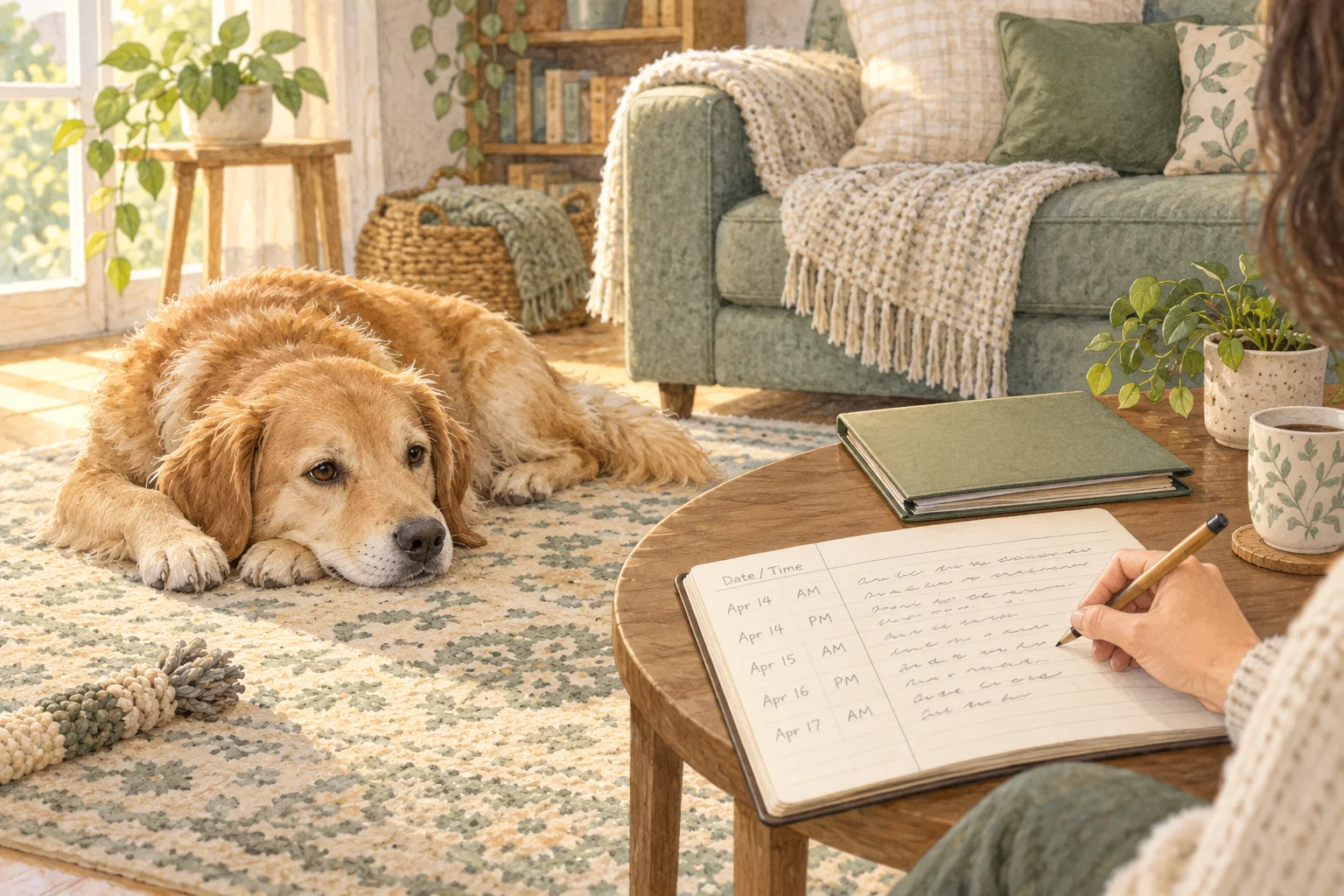
Before a veterinary appointment, put the changes you have noticed into a short dated record. Write what your pet did, when you saw it and how it differs from their usual routine. “Left most of breakfast at 8 a.m.” gives the clinic a more definite observation than “seems fussy.” Neither statement diagnoses the cause.
If the pet needs urgent help, contact a veterinarian or emergency clinic first. Difficulty breathing, collapse, inability to urinate or another serious or rapidly worsening change should not wait while you complete a diary. Cornell’s urgent and emergency guidance identifies respiratory distress, collapse and inability to urinate among emergencies. Follow your clinic’s advice about where to go.
Begin with the reason for the appointment
Put one sentence at the top of the note explaining the concern you are bringing. Include the pet’s name, species and identifying details that the clinic requests. In a household with several pets, use a separate note for each animal so somebody else’s meal or medication does not become part of the wrong history.
Write when you first noticed the change. If the exact time is uncertain, say “first noticed Tuesday morning” or give the approximate period. Distinguish the first observation from the time it might have begun. You may have discovered a problem after being out of the house; an empty room is not proof that nothing happened there.
Keep the reason for calling visible when adding details. If several unrelated concerns belong in a routine appointment, tell the clinic when booking so it can advise on the appropriate visit. Do not assume one short appointment can cover every issue simply because they fit on one page.
Record observations in their ordinary setting
Use language you could explain to the veterinary team. “Stopped halfway up the usual stairs” describes a change. Naming an injured joint from that observation would go beyond what you know. Include which activity was happening and whether you saw the same thing again.
Compare with the pet’s own recent routine. Record actual food offered and left when you can do so accurately, rather than writing “not eating” after seeing only part of a meal. Note relevant bathroom or activity changes without repeatedly handling a painful or frightened animal to obtain a more detailed description.
Keep “not seen” separate from “did not happen.” If several animals share a bowl or litter area, say when you cannot attribute an observation to one of them. Do not invent a precise amount of water drunk from a shared bowl. Ask the clinic whether and how it wants you to obtain any further information.
An example of a note that keeps uncertainty
This hypothetical entry shows a way to organize a report. It is not an example of a condition that is safe to monitor without advice:
Tuesday, 8 a.m.: Offered the usual breakfast. Approximately half remained when I checked at 8:20. I did not watch the whole meal. The other dog could not reach that bowl. Yesterday’s breakfast was eaten normally. Called the clinic and reported the change; following its instructions for the appointment.
The entry gives the observer and veterinarian something to clarify. It does not claim to know why food remained or what happened outside the observation window. If another household member saw something different, add their dated account rather than rewriting the first entry to make both accounts appear identical.
A useful record can be brief. Add a new line when there is a meaningful change or when the clinic asks for a particular check. Do not set an intensive observation schedule from a general article or delay another call because you are waiting to complete several days of notes.
Keep background information beside the timeline
Gather the current food details and the medications or supplements the pet actually receives. UC Davis’s veterinary visit preparation advice asks owners to provide diet information and a medication record with dose and frequency, preferably prepared by the person who administers it. Include relevant recent travel and behavior changes.
Copy medication details from the prescription label or existing veterinary instructions. If you cannot confirm an administration time or amount, mark it uncertain and tell the clinic. A note-taking task is not a reason to change a dose, stop treatment, use somebody else’s medicine or start a home remedy.
Bring relevant existing records or arrange their transfer through the practice’s normal process. A photograph of a label can help you copy it accurately, but keep personal details private. Ask whether the clinic wants any samples, preparation or feeding changes; do not collect a sample or fast the pet on the assumption that every appointment requires it.
Use photographs only when they are safe to take
If a short recording already shows the concern, keep its original date and explain what was happening. Choose the useful segment rather than expecting the clinic to search a long folder. Ask how to send it through the practice’s approved channel.
Do not provoke a symptom for the camera, force movement, restrain an unwilling animal or postpone urgent care to obtain better footage. A photograph may show an appearance at one moment; it cannot substitute for examination. Keep a written description of what you observed even if no recording is available.
Our veterinary warning signs guide addresses when to seek help. The observation record here is for communicating with that help, including after you have already called. A booked appointment does not mean a worsening pet should wait until its original time.
Finish the visit with the instructions you understood
Use the same folder to keep the clinic’s findings and written plan, clearly separated from your earlier observations. Ask the team to clarify anything you cannot follow, including what changes should prompt another call and how follow-up will happen. Do not turn your own interpretation into a new treatment instruction.
If another person provides care at home, pass on the actual veterinary instructions and the record of what has already happened. Keep the timeline available for the follow-up so the next conversation can start with dated changes rather than a reconstruction from memory.