What Human Foods Are Safe for Dogs?
Published Updated

Writer and editor focusing on everyday care and life with a new dog or cat.
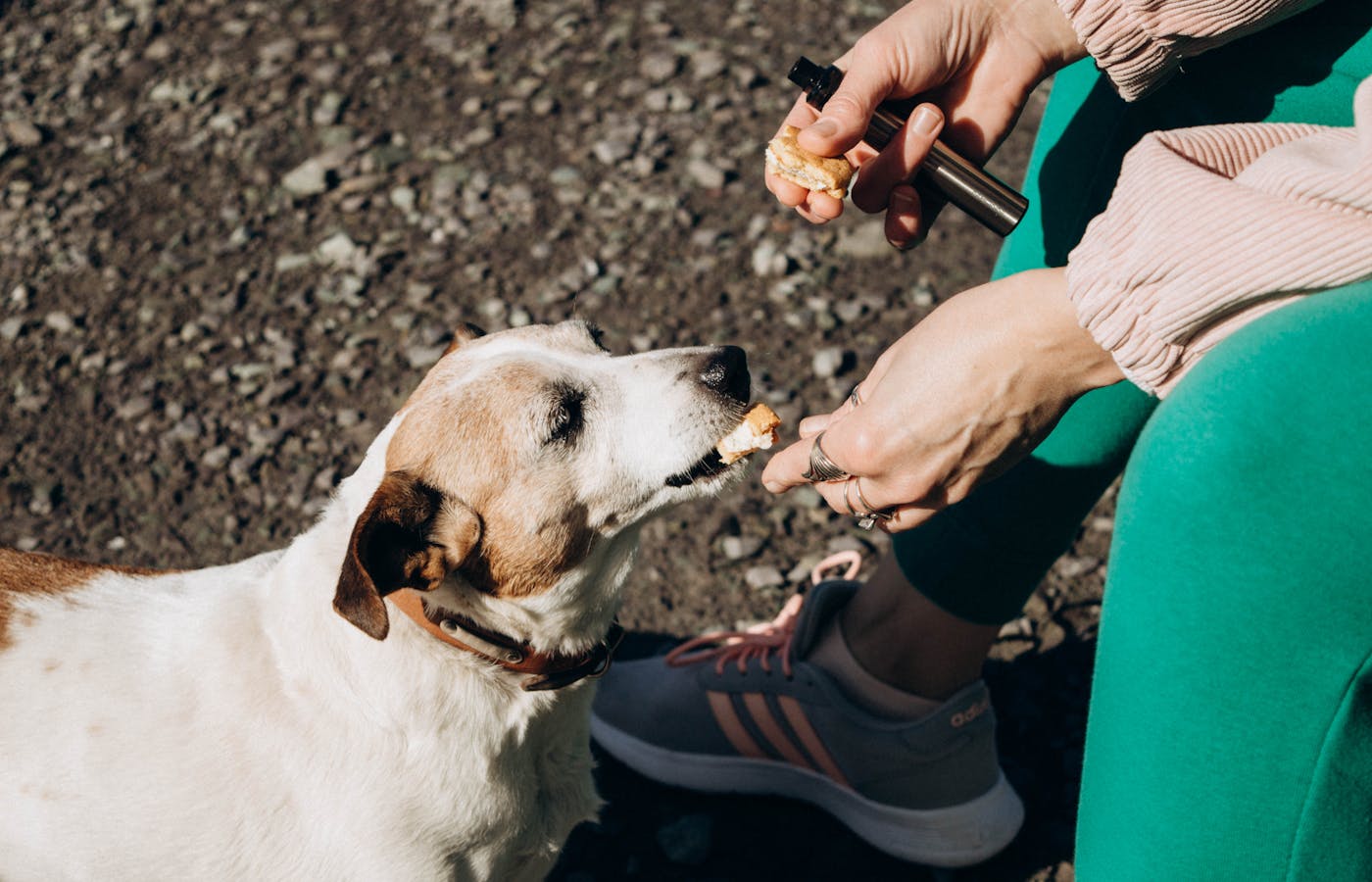
A dog watching the kitchen floor can make almost any dropped bite feel like a big decision. Some plain people foods can be fine as occasional extras, while others can cause serious problems even in small amounts. The hard part is that “natural” and “homemade” do not automatically mean safe for a dog.
This guide keeps the answer practical: which simple foods are usually safer, how small the portions should stay, and which ingredients should stay out of the bowl. Human food should be an occasional add-on, not the center of a dog’s diet. When a dog has allergies, illness, medication, or a sensitive stomach, a veterinarian should guide any changes.
Check ingredients against a specific veterinary or animal poison resource rather than a general social-media food list. Dog food safety changes quickly when an ingredient is sweetened, seasoned, cooked with onion or garlic, or served in a portion meant for people.
Start with plain foods and tiny portions
For a healthy dog whose veterinarian allows extras, start with plain foods served in small, appropriate pieces. Meat and eggs need to be cooked; produce needs preparation appropriate to the food and the dog. A small piece of cooked chicken, turkey, egg, carrot, apple, pumpkin, green bean, rice, or sweet potato may be easier on the stomach than rich leftovers. The word “plain” matters because sauces, butter, salt, garlic, onion, and spice blends can change a harmless-looking bite into a risky one.
Start smaller than you think. A treat-sized piece is enough to see whether the dog tolerates the food. Dogs do not need a full human serving, and small breeds can be affected by portions that look tiny to a person. If the food is new, offer it on a normal day, not during travel, stress, or another diet change.
A simple rule is to treat human foods as extras around a complete dog diet. If toppers, snacks, and leftovers become too frequent, the dog may eat less balanced food, gain weight, or develop digestive trouble that is hard to trace.
Age and size matter too. A young puppy, a toy breed, and a large active adult dog do not handle the same amount of extra food in the same way. When in doubt, use the smallest possible bite and watch the dog over the next day instead of assuming one good reaction means larger portions are safe.
Use a short list of usually safer choices
Many dogs do well with a small rotation of simple foods. Cooked lean meat can be useful when unseasoned and trimmed of heavy fat. Cooked egg can work for some dogs in small amounts. Plain pumpkin is an optional food, not a treatment plan for diarrhea or constipation. Ask a veterinarian before using a food change to manage symptoms.
Use cooked meat only when it is fully cooked and plain. Skip skin, bones, gravy, pan drippings, and heavily salted pieces. If the food came from a seasoned recipe, I would not treat it like plain chicken even if the visible meat looks harmless.
Fruits and vegetables need more care. Apple slices without seeds, blueberries, carrots, cucumber, and green beans are common options. Sweet potato and rice should be cooked and plain. Remove pits, cores, seeds, tough skins, and anything the dog might swallow whole. Hard pieces should be cut to a size that fits the dog safely.
- Plain cooked chicken or turkey in small pieces.
- Cooked egg without butter, oil, or seasoning.
- Carrot, cucumber, green bean, or apple slices.
- Plain cooked rice, pumpkin, or sweet potato.
- Blueberries offered a few at a time.
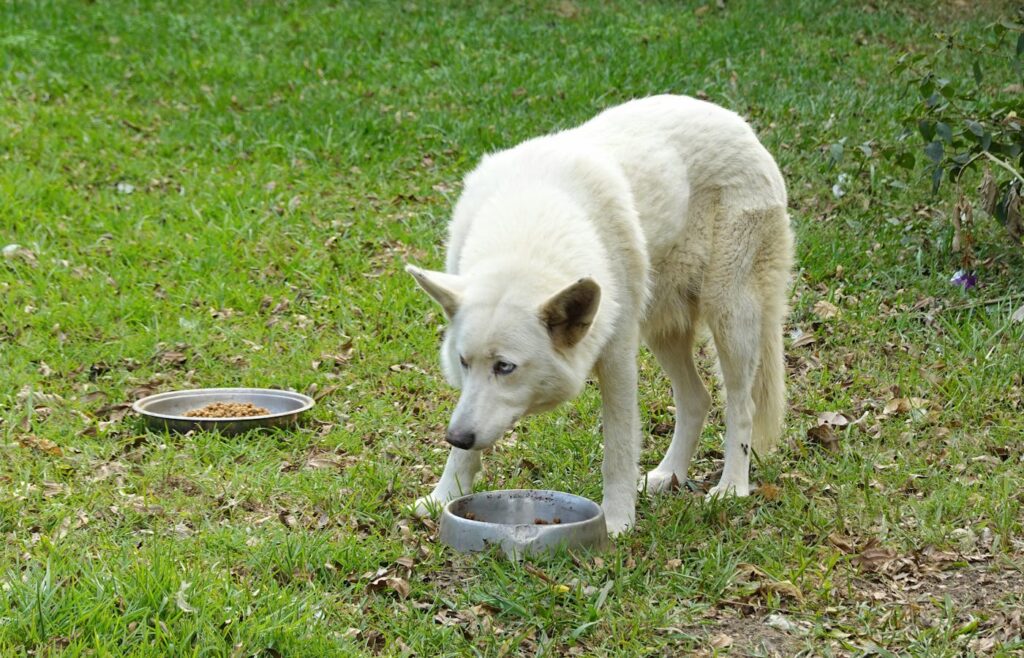
These foods are not magic fixes. They are simply easier choices when an owner wants a small treat or a plain topper. If a dog already eats a complete food and feels well, human food should support that routine quietly, not replace it with a homemade menu that has not been balanced.
Keep dangerous foods completely away
Some human foods should not be tested in small amounts. Chocolate, grapes, raisins, onions, garlic, alcohol, caffeine, macadamia nuts, and anything sweetened with xylitol can be dangerous for dogs. Cooked bones are also risky because they can splinter or cause choking and digestive injury.
Xylitol deserves special attention because it may appear on labels as birch sugar or in sugar-free gum, candy, peanut butter, baked goods, and dental products. Grapes and raisins are another no-test category; the risky amount is not predictable enough for guessing at home.
Leftovers can hide problems. A piece of meat may contain onion powder, garlic powder, heavy salt, butter, sauce, or cooked bone fragments. Baked goods may contain chocolate, raisins, or xylitol. Even foods that seem ordinary can become unsafe once they are part of a recipe.
If a dog eats a dangerous food, do not wait to see whether symptoms appear. Call a veterinarian, emergency clinic, or pet poison helpline with the dog’s weight, the food, the amount, and the time it happened. Fast information is more useful than guessing from the internet after the fact.
Storage habits help prevent accidents. Keep chocolate, grapes, raisins, baked goods, gum, and flavored snacks away from counters, low shelves, open bags, and children’s backpacks. Dogs often find unsafe foods when people are distracted, not when someone is actively feeding them.
Watch portions more than the food name
Portion size is where many safe-food habits go wrong. A dog may tolerate one bite of plain chicken but not a plate of rich leftovers. A few blueberries may be fine, while a whole handful may upset the stomach. Safe food can still become too much food. Human food can also add calories quickly, especially for small dogs, senior dogs, and dogs already gaining weight.
Use human foods as training rewards, medication helpers, or occasional bowl toppers rather than constant snacks. If a dog gets extras every time someone cooks, begs, or sits near the table, the habit can become harder to manage than the food itself.
- Choose one plain food at a time.
- Offer a very small amount first.
- Wait and watch for vomiting, diarrhea, itching, or low energy.
- Keep the rest of the diet normal that day.
- Write down foods that cause problems.
- Ask a vet before repeating a food that triggered symptoms.
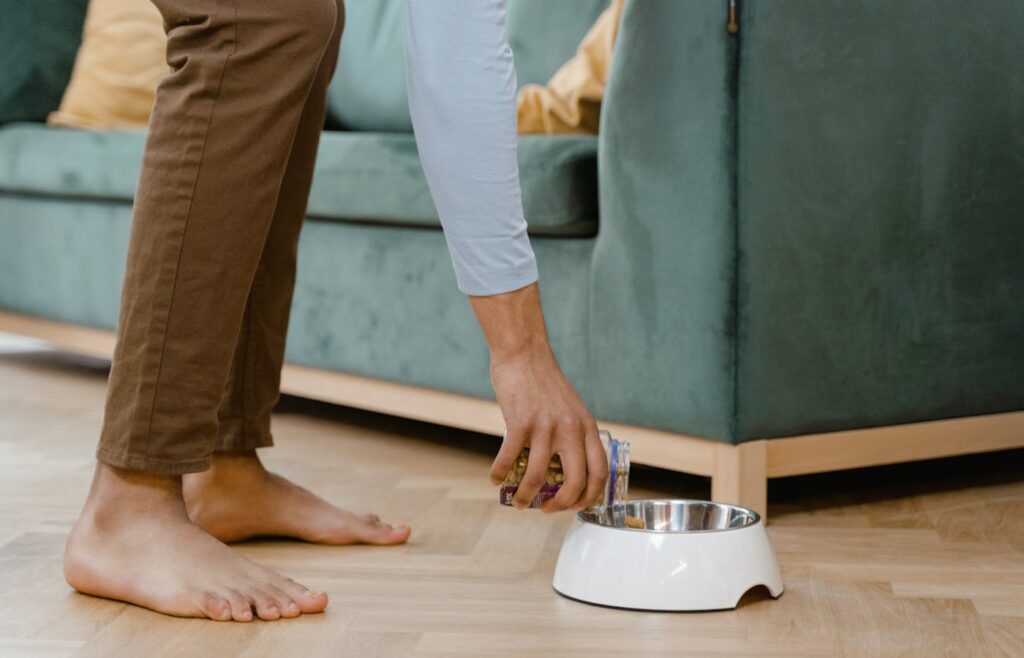
Portions should also change when the regular meal changes. If a dog already had extra treats at training class, a chew, or a rich medication pocket, skip the people-food topper that day. The safest routine is usually the one that stays boring enough to track.
Make treats fit the dog’s normal diet
Safe treats still need limits. If human food replaces too much of the regular diet, the dog may miss nutrients from balanced dog food. Treats are also easy to overuse during training because one session can turn into many extra calories. Tiny pieces work better than large bites because the dog gets the reward without a heavy serving.
Think about the reason for the treat. If the goal is training, use pea-sized pieces. If the goal is enrichment, a small amount of plain food can be tucked into a puzzle toy or mixed with normal food. If the goal is comfort, keep the portion small and avoid teaching the dog that every anxious moment leads to people food.
- Use tiny pieces during training.
- Keep rich foods out of daily routines.
- Do not feed from the table if begging is already a problem.
- Adjust regular meals if treats become frequent.
- Stop a new food if the dog reacts poorly.
It can help to pick a few approved foods for the whole household. If everyone knows that plain carrot, a tiny cooked egg piece, or a small apple slice is allowed, the dog is less likely to receive random bites from five different people. Consistency protects both the dog’s stomach and the training routine.
Know when to ask the vet first
Some dogs should not experiment with human foods without professional guidance. Puppies, seniors, overweight dogs, dogs with pancreatitis history, kidney disease, diabetes, food allergies, chronic vomiting, chronic diarrhea, or prescription diets need extra care. In those cases, even a common “safe” food may not fit the dog’s medical needs.
It is also worth asking before using human food to solve a health issue. Pumpkin, rice, chicken, or bland foods may be mentioned often, but ongoing stomach trouble, appetite changes, weight loss, itching, or repeated vomiting deserve a real diagnosis. Food can support care, but it should not hide a problem that needs treatment.
For most healthy adult dogs, safe human foods are simple, plain, small, and occasional. Choose one food at a time, avoid dangerous ingredients completely, and keep the regular diet as the foundation. That gives the dog a little variety without turning every kitchen moment into a nutrition risk.
Sources and further reading
- ASPCA food hazard guidance: Further reading on this topic.

Keep this guide handy
Save this article for later. Read the guide above for the details and cautions.
Save to Pinterest (opens in a new tab)