
How to Teach a Dog Basic Commands at Home
Published Updated

By Silas Payao
Writer and editor focusing on clear steps for new dog and cat owners.
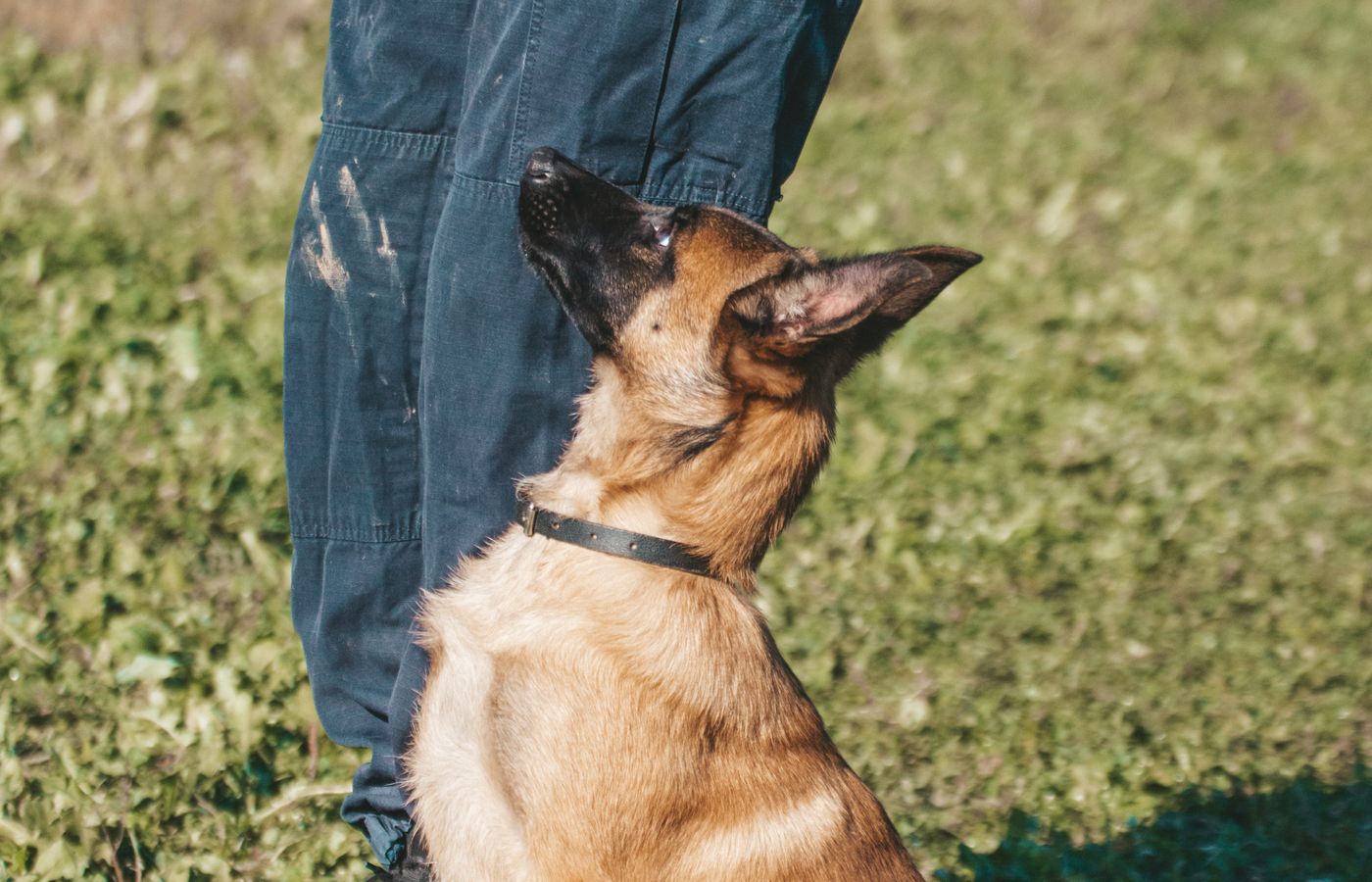
A dog usually learns household cues from very ordinary moments: a treat in your hand, a quiet room, a short pause, and a reward that arrives at exactly the right time. That learning curve gets much easier with short practice windows and one repeated cue at a time.
The goal is not to make the dog perform for a long time on the first day. A beginner routine should help the dog understand that a cue has one meaning, the reward comes at the right moment, and training ends before either of you gets frustrated.
Keep the first lessons small enough that the dog can win often. A dog that succeeds repeatedly at home is much easier to teach around doors, guests, food bowls, sidewalks, and busier rooms later.
Prepare a quiet practice space before giving commands
A good first training spot is familiar, boring, and easy to reset. Choose a room where the dog is not watching people cook, chase another pet, stare out a busy window, or listen to a doorbell. Remove loose toys for a few minutes, put treats in a pocket or small bowl, and decide which command you are practicing before the session starts.
The reward should be small enough to deliver quickly. Many dogs work well for tiny soft treats, part of a meal, or another food approved for their diet. If food makes the dog too excited, use a calmer treat, pause more often, and practice after a short walk instead of right before dinner.
Do not begin by saying every cue the dog knows. Pick one behavior and let the dog settle into that pattern. A five-minute session with one clear goal usually teaches more than twenty minutes of mixed instructions.
Choose one cue, one hand signal, and fast reward timing
Dogs learn faster when the cue stays consistent. If one person says “sit,” another says “sit down,” and another repeats “come here, come on, come,” the dog has to solve a language puzzle before solving the behavior. Choose one word for each command and use it the same way.
A hand signal can help, especially at home where the dog is watching your body closely. Keep the signal simple and avoid waving treats around after the cue. At first, the treat may lure the position. Over time, the hand signal should become lighter while the reward appears after the dog responds.
Timing matters more than volume. Reward the moment the correct behavior happens, not ten seconds later after the dog has already stood up, wandered away, or started another action. A calm marker word like “yes” can help you capture the exact instant before handing over the treat.
Start with sit because it gives the dog an easy first win
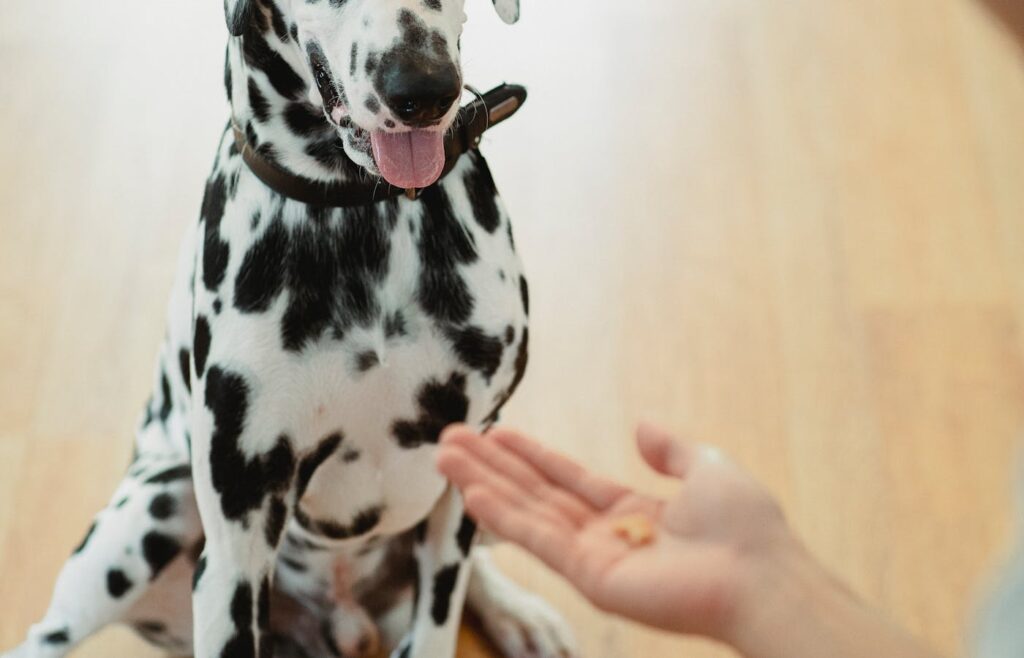
Sit is often the easiest first command because many dogs naturally lower their back end when a treat moves slightly above the nose. Hold the treat close enough for interest, lift it gently toward the top of the head, and wait for the dog to fold into the sit. As soon as the dog sits, mark and reward.
Avoid pushing the dog’s hips down. Physical pressure can confuse some dogs and make training feel like something being done to them instead of something they are figuring out. If the dog backs up, lower the treat, move to a quieter place, or practice beside a wall so there is less room to drift backward.
Once the movement is predictable, add the word “sit” before the hand motion. Say it once, give the signal, reward the sit, and release the dog with a simple word such as “okay.” The release helps the dog learn when the command is finished.
Teach stay only after the dog understands the starting position
Stay is not a separate trick at first. It is the dog learning to hold a position for one more second. Ask for a sit, reward it, pause for a heartbeat, reward again, then release. That tiny delay is the beginning of stay. If you step across the room immediately, most beginner dogs will simply follow you.
Build stay in three separate pieces: duration, distance, and distraction. Start with duration while you remain close. Then take one small step back and return before rewarding. Only after that should you add mild distractions such as turning your shoulders, touching a doorknob, or placing a low-value object nearby.
If the dog breaks the stay, keep the correction boring. Reset the sit, shorten the difficulty, and reward a smaller success. The dog is not being stubborn just because the exercise was too hard for that stage.
Practice come as a happy response, not a punishment
Come should feel safe to the dog. Never call the dog to scold, trim nails, end every fun moment, or do something unpleasant without warning. If “come” predicts trouble, the dog may start checking the situation before deciding whether to respond.
Begin indoors from only a few steps away. Say the cue once in a bright voice, move backward slightly, and reward when the dog reaches you. Add praise, a treat, and a gentle collar touch so the dog learns that coming all the way to you is part of the behavior.
As the dog improves, practice from different rooms, around corners, and near mild distractions. Keep rewards generous for recall. A reliable come command can protect the dog around doors, dropped food, guests, and outdoor surprises, so it deserves better payment than most easy behaviors.
Turn leash manners and wait cues into household habits
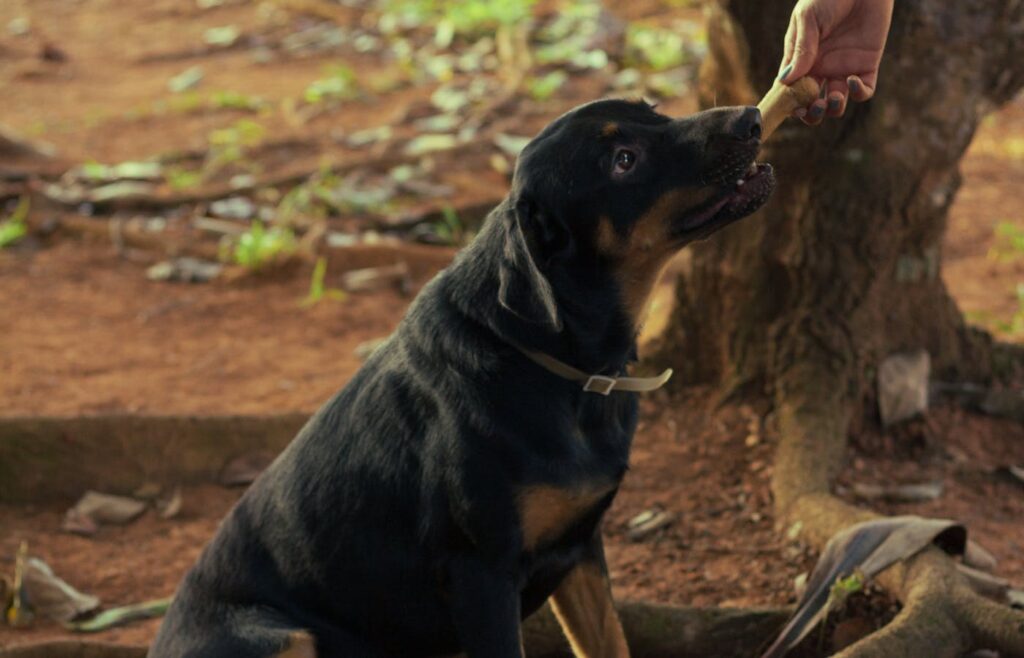
Basic commands become useful when they appear in daily life. Ask for sit before putting down the food bowl, wait before opening a door, and come before clipping on the leash. These moments show the dog that commands are not a performance game; they are part of how the household moves calmly.
Leash manners can start indoors. Clip the leash on, reward the dog for standing beside you, take one or two steps, and reward again before the leash tightens. If the dog surges forward, stop moving instead of pulling backward. Reward the dog when they turn back or step near you again.
Keep early leash practice short enough to stay successful. A hallway, living room, porch, or quiet yard can teach the pattern before the dog has to manage smells, people, other dogs, and traffic sounds.
Keep a simple command routine instead of drilling all day
A steady routine protects the dog’s attention and your patience. Most beginners do better with several tiny sessions than one long block. End while the dog is still interested, and leave a little energy for the next lesson.
- Choose one command for the session.
- Practice in a quiet place for three to five minutes.
- Reward the correct behavior immediately.
- Release the dog after the command is complete.
- Repeat in another room only after the first room feels easy.
- Stop before the dog becomes tired, jumpy, or distracted.
Write down which cue was practiced and what made it harder. That may be the door, a second person, another pet, a toy on the floor, or the sound of food being prepared. Those notes tell you what to add gradually instead of guessing.
A command is not truly learned because the dog did it once; it is learned when the dog understands it in more than one ordinary situation.
Fix common mistakes without making training tense
The most common mistake is repeating the cue until it becomes background noise. If the dog does not respond, pause and make the setup easier. Move closer, lower the distraction, use a clearer hand signal, or return to a behavior the dog can perform. Repeating louder rarely teaches the missing step.
Another mistake is rewarding late. If the dog sits, then jumps, then receives the treat, the jump may be what you paid for. Use a marker word and deliver the treat calmly. If the dog grabs at your hand, close your fist, wait for a softer mouth, and reward when the dog can take food politely.
Frustration should be a stop sign. If your voice changes, the dog starts avoiding you, or the session becomes a contest, end with an easy win and take a break. Training at home should make communication clearer, not make the dog worried about guessing wrong.
Know when basic command training needs extra help
Some dogs need more support than a home routine can provide. A dog that growls, snaps, hides, freezes, guards food, panics on leash, or suddenly stops responding may be dealing with fear, pain, illness, or a training history you cannot see from the outside. In those cases, a veterinarian or qualified positive-reinforcement trainer is worth contacting.
For most dogs, basic commands grow through repetition that feels fair. Start in quiet rooms, reward fast, add difficulty slowly, and protect the meaning of each cue. The dog does not need a perfect owner. The dog needs a clear pattern that stays kind enough to trust.
- Use one word for each command.
- Reward the exact behavior you want repeated.
- Practice sit, stay, come, and leash manners separately.
- Add distractions only after the easy version works.
- Stop the session before frustration takes over.
Teaching a dog basic commands at home has the strongest results when the lessons feel ordinary. A few minutes near the sofa, a calm sit before dinner, a happy recall from the hallway, and a patient reset after mistakes can build the foundation for much better communication.
Sources and further reading
- AVSAB training position statements: Further reading on this topic.

Keep this guide handy
Save this article for later. Read the guide above for the details and cautions.
Save to Pinterest (opens in a new tab)