
Check Your Pet’s Microchip Contact Details Before Travel
Published
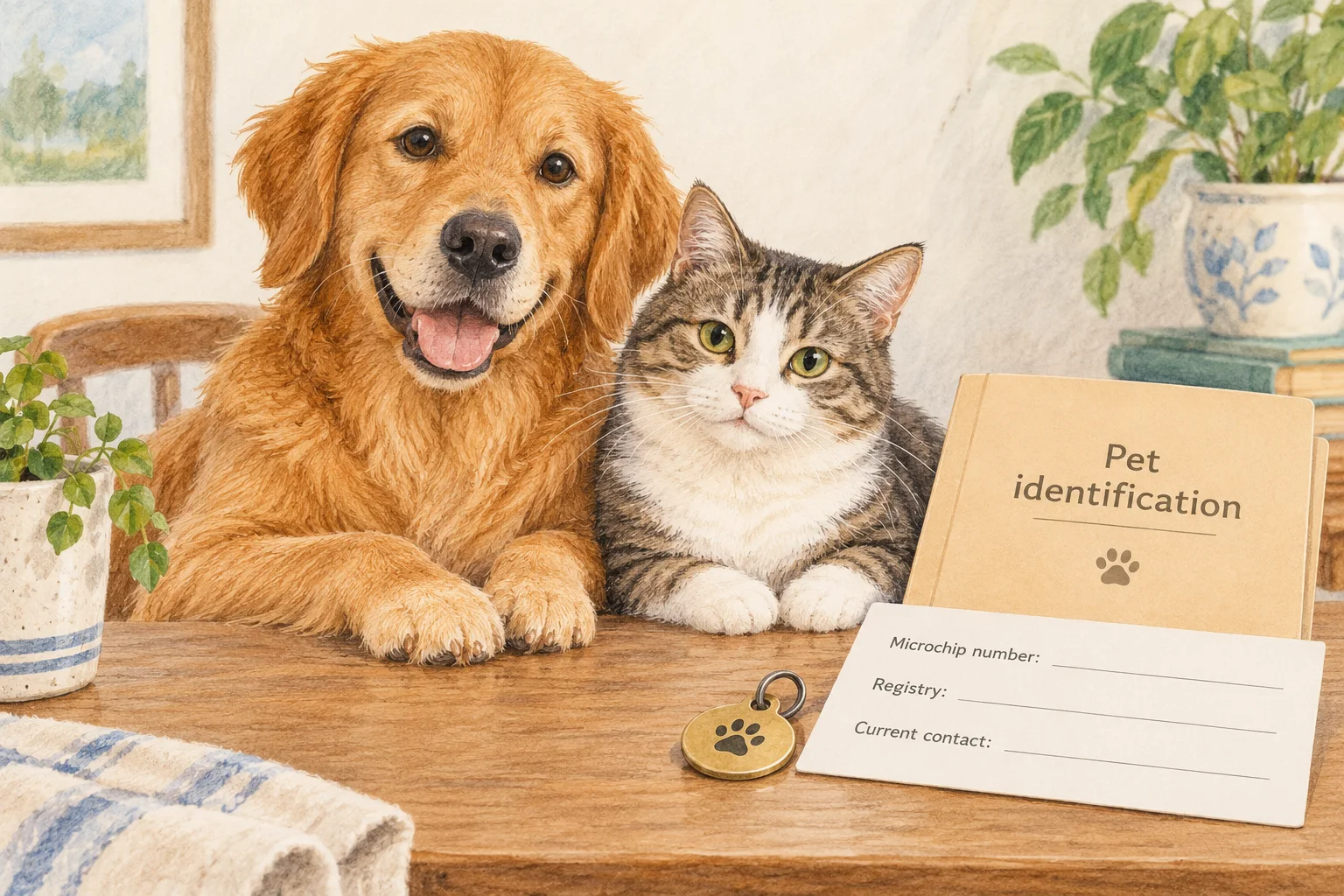
Before a trip, check the contact details connected to your pet’s microchip, not just whether the pet has a chip. An implanted chip and an up-to-date registration are different things. A scanner may read an identification number successfully while the registry still points to an old phone number.
Start with your pet’s records and the registry’s official account or support process. If you cannot find the number or identify the registry, ask your veterinarian for help. You do not need to search for the implant yourself or buy a scanner to complete an ordinary contact-details check.
Know what the chip does
The American Veterinary Medical Association explains that a microchip stores a unique identification number that a compatible scanner can read. The owner’s contact information is kept in an associated registry. Keeping that registration accurate is part of making the identification useful.
A standard identification microchip does not show your pet’s live location on a map. Do not confuse it with a GPS tracker or assume it replaces a suitable ID tag. The AVMA recommends using current identification alongside microchipping. A visible tag may let someone contact you without first finding access to a scanner.
The AVMA’s microchip registration guidance also recommends asking the veterinarian to scan the chip during routine checkups to confirm that it is present and working. Arrange a suitable visit if that check is needed; do not treat a successful online login as proof that the implant was scanned.
Match the number to the pet and its records
Locate the microchip number on the implantation paperwork, adoption documents or veterinary record. Check which pet the document describes, especially in a household with several animals. Copy the full number carefully rather than relying on a shortened label or a photograph with the final digits cut off.
If records conflict, ask the veterinary practice to clarify them. Do not simply choose whichever number appears most often. A professional scan can help establish the number associated with the animal in front of them.
Keep the identifier with the pet’s other important documents in a place you can reach while traveling. That does not mean posting the complete document publicly. Adoption records, addresses and contact details should be shared only where needed through appropriate channels.
Find the correct registry before changing information
The chip manufacturer, the implantation practice and the registration service may not be the same organization. Use the registration details in your records or ask the practice for help identifying the correct service. Do not assume that updating your veterinary account also updates a separate chip registry.
For a U.S. pet with a known chip number but an uncertain registry, the AVMA points owners toward the American Animal Hospital Association’s registry lookup service. A lookup helps identify participating registry information; it is not a live pet-location service or a substitute for keeping the registration itself current. Registry arrangements differ by country.
Use an official registry website or its verified support contact. If you are unsure whether a message requesting payment or personal information is genuine, return to the organization through a contact route you have independently checked. Do not transfer ownership or create conflicting records just to get past a confusing form.
Check the details that matter while you are away
Confirm the primary phone number and address, plus any other contact fields that registry supports. Think about whether the primary phone will actually be reachable during the trip. If an additional contact is permitted, choose someone who has agreed to that role and knows how to reach you.
Use an email account you still monitor. An old work email or a disconnected telephone number can remain in a saved account long after a move. Complete the registry’s actual save or confirmation process, then reopen the record where possible to check what was stored. Typing into a form without completing the update is not confirmation.
If the pet was adopted or ownership has changed, follow the registry’s official transfer procedure. A veterinary record naming you does not establish that a separate registry transfer was completed. Resolve the discrepancy with the appropriate organization rather than changing another person’s details without authority.
A travel check with separate confirmations
| Check | What confirms it |
|---|---|
| Chip number | Matched veterinary or implantation record; professional scan if needed |
| Registry | The correct service identified through records or verified assistance |
| Current contacts | The saved record reopened or the registry’s completed update confirmation |
| Reachable backup | The person agrees and knows the current travel arrangement |
| Visible identification | The pet’s suitable tag is present and its information remains readable |
Keep unanswered fields marked as unanswered. A travel departure date does not make an unresolved registry problem disappear. Contact the practice or registry in time to allow their normal process to work.
Give the sitter the practical information, not your passwords
A sitter may need your contact details, the pet’s identifying information, veterinary contacts and an agreed plan for a missing pet. They generally do not need your registry password. Keep account access private and use the service’s authorized options when another person needs a formal role.
Check that the physical tag and the written handover do not contradict one another. Our guide to pet ID tag information covers the visible identification separately. Microchip records support that arrangement; they do not replace barriers, supervision or suitable transport.
Before leaving, agree what the sitter should do if a pet escapes and how to reach you or the backup person promptly. Include the relevant local animal-service and veterinary contacts. If travel crosses a border, confirm the destination’s identification and entry requirements with the responsible authority and veterinarian; a registry update by itself is not travel clearance.