How to Keep Pets Safe Around Houseplants
Houseplants can make a room feel calmer, but they also add new temptations for pets. Leaves move, soil smells interesting, pots can tip, and some plants can make dogs or cats sick if they chew them. Learning how to keep pets safe around houseplants starts with knowing what is in the home and how your pet behaves around it.
Some pets ignore plants for years. Others nibble leaves, dig in soil, drink from saucers, or knock pots over during a burst of energy. A safer setup should assume curiosity will happen eventually. I like to treat plants the way I treat cords, cleaners, and small objects: anything within reach needs a plan.
The safer aim is not to remove every plant from the house. It is to choose, place, and maintain plants in a way that reduces risk before a pet gets interested.
Identify every plant before trusting its location
The first step is knowing exactly which plants are in your home. Common names can be confusing because different plants may share similar nicknames. A plant may be sold as a “lily,” “palm,” “ivy,” or “philodendron” without enough detail to judge pet risk. Take photos, check plant tags, and write down the names before deciding where each pot belongs.
This matters because risk is not the same for every plant. ASPCA plant toxicity references are useful for checking names, especially with lilies, sago palm, pothos, dieffenbachia, aloe, and philodendron. Some plants cause mild stomach upset, while others can be serious for cats or dogs.
If you are not sure what a plant is, keep it out of reach until you can identify it. A high shelf is not always enough for cats, and a low plant stand may still be easy for a dog to reach. If the plant came from a cutting, gift, or unlabeled store display, do not guess from leaf shape alone. Unidentified plants belong in the temporary caution category.
Separate toxic plants from curious pets
Once each plant is identified, separate any plant that could be unsafe if chewed. This is especially important in homes with kittens, puppies, senior pets with behavior changes, or pets that already mouth leaves. A plant does not need to be eaten often to create a problem. One curious moment can be enough to cause vomiting, drooling, mouth irritation, or a more urgent reaction.
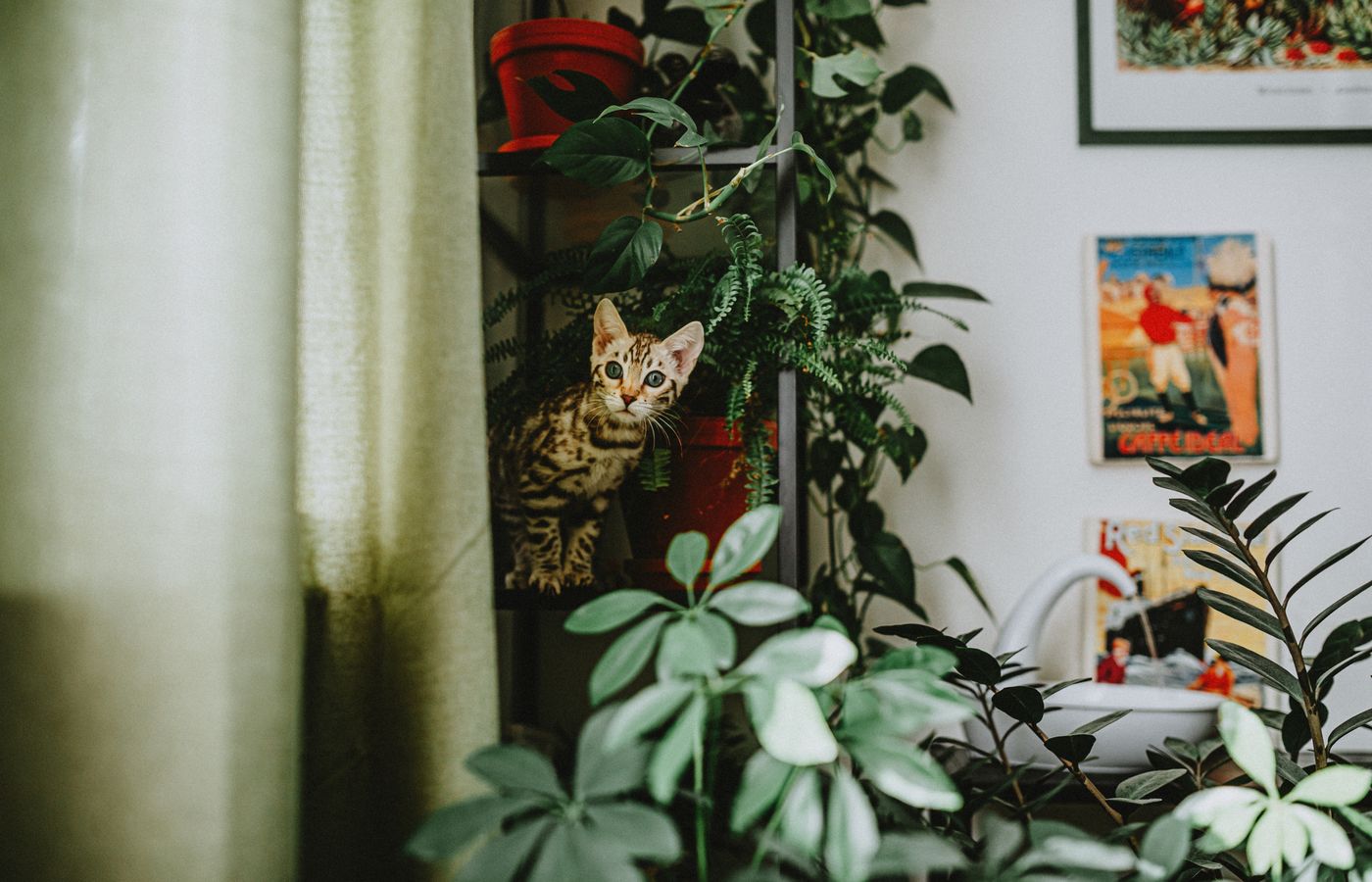
High shelves, closed rooms, hanging planters, plant cabinets, and pet-free offices can help, but only when they match the pet’s abilities. Some cats climb to impossible places. Some dogs can reach tables with their front paws. If a pet has already shown interest in a plant, treat that plant as accessible until proven otherwise.
For households with both dogs and cats, plan for the most determined animal, not the calmest one. A dog may ignore a pot that a cat knocks down. Plant safety is strongest when the risky plant is physically separated from the pet, not just placed slightly farther away.
- Move risky plants behind a closed door or into a pet-free room.
- Avoid placing unsafe plants on narrow shelves that can be knocked over.
- Do not rely on height alone if a cat can climb to the spot.
- Remove dropped leaves quickly, especially from plants you already know are risky.
Make safe plants less tempting too
Even pet-safer plants can create trouble when a dog or cat digs, chews, or tips the pot. Soil can spread across the floor, pot fragments can break, and a heavy planter can injure a paw. A plant does not have to be toxic to be part of a household mess or minor injury.
Look at the plant from your pet’s eye level. Dangling leaves may look like toys. Loose moss or decorative stones may invite pawing. A pot near a window perch may become part of a cat’s route. A floor plant beside a dog bed may get bumped every day. Small changes in placement can remove a lot of temptation.
Use heavier pots for floor plants, stable saucers, and stands that do not wobble. If a plant sheds leaves, place it somewhere easy to sweep. If a cat loves the window, leave room around the perch instead of filling the whole area with plants.
Pay attention to plants near daily pet routes. A pot beside a food bowl, sofa, crate, or sunny window may get repeated contact simply because the pet passes it often. Moving the pot a few feet can reduce interest without changing the room.
Protect soil, fertilizer, and plant water
Pet safety around houseplants is not only about leaves. Potting soil, fertilizer pellets, plant food, pest treatments, and standing water in saucers can all attract pets. Some animals dig because the soil smells interesting. Others drink from plant trays because the water is available. Those habits can expose them to things you did not mean to offer.
Store fertilizers, sprays, neem oil, soil additives, and pest treatments in a closed cabinet away from pet food and treats. Do not leave open bags of potting mix where a pet can sniff or tear them. If you use any plant product, read the label carefully and keep pets away from the plant until it is safe for them to return to the area.
Covering soil can help with digging, but choose the cover carefully. Large smooth stones may discourage paws, while tiny pebbles can become choking hazards for some pets. Avoid cocoa mulch in pet areas. If a pet keeps digging despite barriers, the safest answer may be moving the plant rather than adding more obstacles.
Also check what collects under the pot. Saucers can hold spilled fertilizer water, loose soil, dead leaves, and small plant tags. Wiping saucers and sweeping around pots should be part of the safety routine.
Give pets better things to chew and investigate
Pets often bother plants because they are bored, curious, under-stimulated, or drawn to movement and smell. If the plant is the most interesting thing in the room, the plant will keep getting attention. A safer home gives the pet better choices before the plant becomes a habit.
For cats, vertical space, scratching posts, food puzzles, wand play, and approved cat grass can redirect some plant interest. For dogs, chew toys, sniff mats, puzzle feeders, training games, and regular walks can reduce the urge to investigate pots. The goal is to make the safe option more rewarding than the plant.
Timing helps too. If your pet chews plants at night, during work hours, or right before meals, the behavior may be tied to routine. Add enrichment before those windows. Moving the plant matters, but changing the pet’s available activity can make the change last longer.
- Offer approved chews or toys away from plant areas.
- Use play sessions before the times your pet usually bothers plants.
- Keep cat perches clear instead of crowded with dangling leaves.
- Reward calm behavior near plants before chewing starts.
Train a simple leave-it habit near plants
A physical setup is important, but training adds another layer of safety. A simple leave-it cue can help when a pet notices a leaf, sniffs a pot, or starts pawing at soil. The cue should be taught with low-value items first, then practiced near plants only when the pet can succeed.
Avoid yelling after the pet already has a leaf in its mouth. That can turn the plant into a chase game or make the pet hide the behavior. Instead, interrupt early, redirect to a toy or treat, and reward moving away from the plant. Calm repetition usually works better than dramatic reactions.
Training does not make toxic plants safe within reach. It simply helps with everyday moments when a pet gets curious. If a plant is dangerous, separation still matters. The cue is a backup, not the whole safety plan.
- Teach leave-it with a boring object away from plants.
- Reward the pet for looking away from the object.
- Practice near a safe plant while the pet is calm.
- Redirect to a toy, treat, or mat when the pet moves away.
- Move the plant if the pet keeps returning to it.
Watch for warning signs after chewing
If a pet chews a plant, do not wait for dramatic symptoms before paying attention. Remove any plant pieces from the pet’s mouth if you can do so safely, move the plant away, and identify what was eaten. Take a photo of the plant, the pot, and any label. That information can help a veterinarian understand the risk faster.
Warning signs can include vomiting, drooling, pawing at the mouth, diarrhea, loss of appetite, unusual tiredness, shaking, trouble breathing, weakness, or behavior that feels very different from normal. The signs depend on the plant, the amount eaten, and the pet’s size and health.
When in doubt, call a veterinarian or pet poison helpline and explain what happened. Do not try home treatments unless a professional tells you to. Guessing can waste time or make the situation worse. Keep the plant sample or photo available, and note the approximate time the chewing happened. Those details are often more useful than trying to name the plant from memory during a stressful moment.
Review plant placement when your pet changes
A setup that worked last year may stop working when the pet changes. Puppies grow taller. Kittens learn to climb. Senior pets may explore differently, lose coordination, or start chewing unusual items. A new pet, visiting animal, baby gate, moved sofa, or rearranged window perch can also change access to plants.
Walk through the home after any major change and check plant height, stability, fallen leaves, soil access, and nearby furniture. Look for paths a pet could use to reach shelves or windowsills. If a plant suddenly gets attention, treat that as information, not misbehavior that came from nowhere.
Seasonal changes matter too. Plants move indoors during cold weather, windowsills become more crowded, and pets may spend more time inside. A winter plant arrangement that looks tidy to you may create a new climbing route for a cat or a new chewing target for a bored dog.
Keeping pets safe around houseplants comes down to staying ahead of curiosity. Identify plants, separate risky ones, protect soil and plant products, offer better enrichment, teach a calm leave-it cue, and keep reviewing the setup as pets grow and habits change. A little prevention makes it easier to enjoy both the plants and the pets in the same home.