How to Groom a Cat at Home
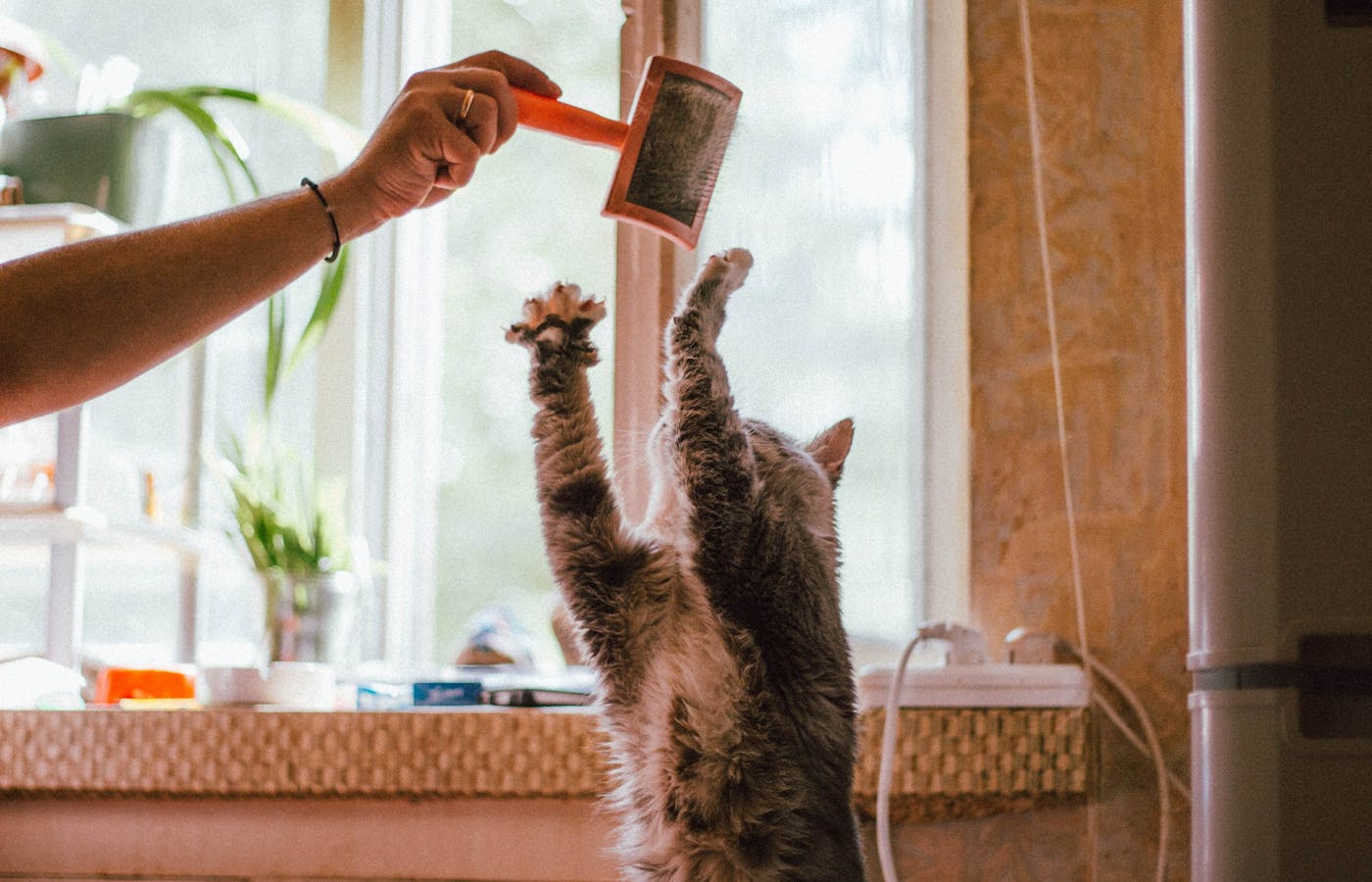
The brush usually tells you how the session is going before the cat does anything dramatic. If the body stays loose and the tail is quiet, you can keep the moment small and useful. If the skin starts twitching, the ears turn back, or the cat keeps looking for an exit, the session has already given you its answer.
If you are learning how to groom a cat at home, start with patience rather than equipment. A gentle five-minute session that ends calmly is more useful than a long session that teaches the cat to run when the brush appears. Grooming should build trust, not test who is stronger.
The first rule is to stop before the cat is overwhelmed. You can always do another short session later, but a scared cat remembers the moment grooming became too much.
Start with a short grooming session in a familiar spot
Choose a place where the cat already feels safe: a sofa, bed, rug, low table, or quiet floor area. Avoid slippery counters and high surfaces if the cat may jump away. Put the brush, towel, treats, and nail clippers nearby before you begin so you are not reaching around the cat during the session.
Begin with touch the cat already accepts. Stroke the shoulders, cheeks, back, or chest for a few seconds, then introduce the brush for one or two gentle passes. If the cat stays relaxed, continue briefly. If the tail lashes, ears flatten, skin twitches, or the cat turns sharply toward your hand, pause. Those small signals matter.
I would rather end the first session after two calm minutes than push for a complete groom. The cat is learning that grooming starts and stops predictably.
Choose the grooming tool that matches the coat
The right tool depends on coat length, shedding level, and how sensitive the cat is. A soft bristle brush may be enough for a short-haired cat that only needs loose hair removed. A metal comb can help with longer coats because it finds tangles close to the skin. A slicker brush can be useful, but it needs a light hand so it does not scrape.
Do not assume the strongest shedding tool is the best starter tool. Some cats dislike stiff teeth, loud handles, or tugging pressure. If the cat has never been brushed, start with the gentlest option and work up only if the coat needs more help. The tool should glide through the coat, not drag through knots.
| Coat or need | Useful starter tool |
|---|---|
| Short smooth coat | Soft brush or grooming mitt |
| Medium shedding coat | Comb plus gentle brush |
| Long hair | Wide comb for tangles before brushing |
| Sensitive cat | Soft mitt and very short sessions |
Brush in the direction the fur naturally lies
Brush with the coat first. Start at the shoulders or back and move in small sections toward the sides, chest, and tail area only if the cat allows it. Many cats dislike belly handling, rear-leg brushing, and tail pulling, so those areas should be approached slowly or left for a professional if the cat reacts strongly.
Use short, light strokes instead of pressing down. If the brush fills quickly, remove the hair and continue. Tugging through loose hair can feel like pulling, especially on older cats or cats with thin skin. For a cat that gets overstimulated, alternate one brush pass with one normal petting stroke so the session feels less mechanical.
The brush should follow the cat’s tolerance, not your checklist. If only the back gets done today, that is still progress.
Check long-haired cats for mats before brushing harder
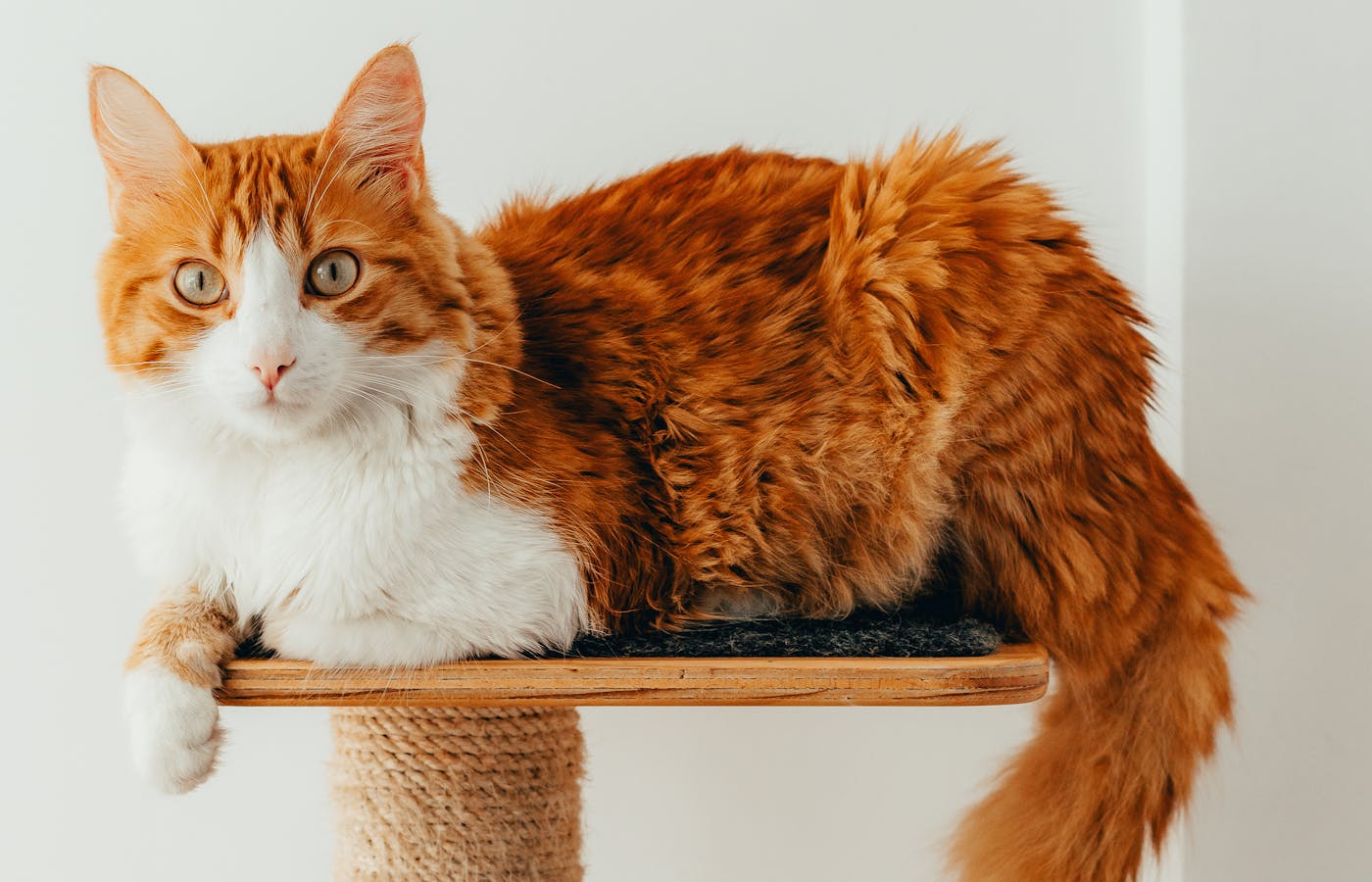
Long-haired cats need a slower first pass because mats can hide under the chest, behind the ears, under the armpits, along the back legs, and near the tail. A mat is not just a messy tangle. It can pull on the skin and become painful. Brushing hard over it can make the cat distrust grooming quickly. Before brushing turns into a struggle, reading cat body language as a beginner can help you notice when a cat needs a pause.
Use your fingers and a comb to find tangles gently. If a small tangle loosens without pulling, work from the outer edge inward. If the mat is tight, close to the skin, or the cat reacts with pain, do not cut it with scissors. Cat skin can fold into the mat, and it is easy to cut skin by mistake.
- Stop if the comb catches close to the skin.
- Do not wet a mat before removing it.
- Keep scissors away from tight mats.
- Ask a groomer or veterinarian for mats that pull, smell, or cover a large area.
Handle nail trimming as a separate skill
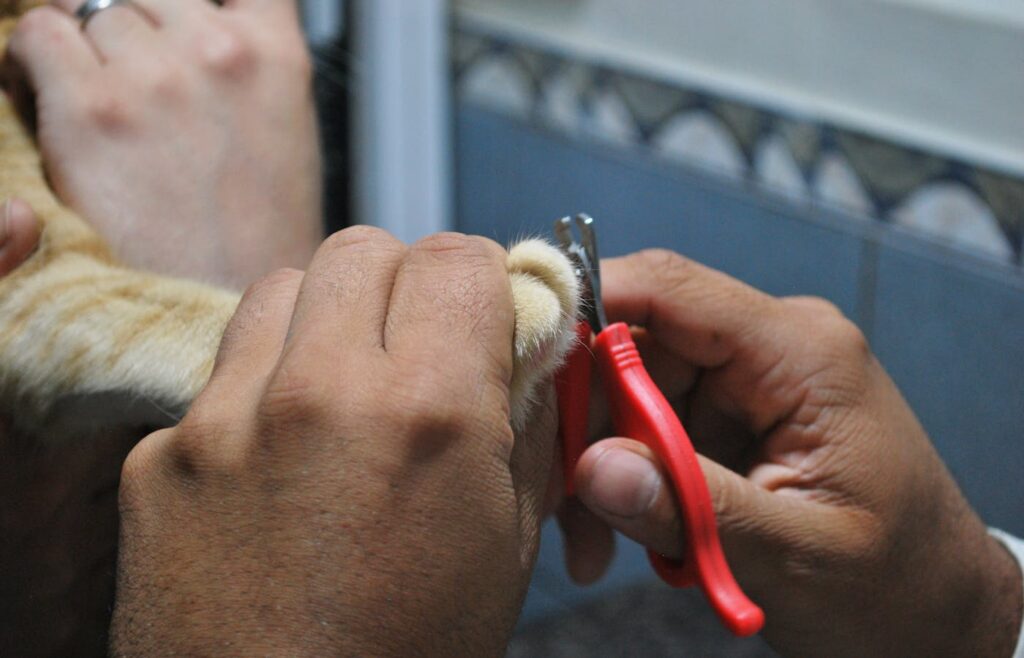
Nail trimming should not be hidden inside a long brushing session at first. Treat it as its own small skill. Touch one paw, reward, and stop. Later, press gently to extend one nail, reward, and stop. When the cat accepts that, trim only the sharp tip of one or two nails. You do not need to finish all four paws in one sitting.
Use cat nail clippers with good light and avoid the pink quick inside the nail. Cutting the quick can hurt and bleed, and it can make the next trim much harder. If you cannot clearly see where to cut, ask a veterinarian or groomer to show you the first time. Clear nails are easier to learn on than dark nails.
- Touch the paw during a relaxed moment.
- Press gently to extend one nail.
- Trim only the sharp clear tip.
- Reward and pause before the cat struggles.
- Finish another paw later if needed.
Clean eyes, ears, and small messes gently
Basic grooming can include wiping small eye crusts, checking ears, and cleaning minor dirt from the coat. Use a soft damp cloth for visible dirt around the face, and wipe away from the eye rather than toward it. Do not use cotton swabs deep in the ear. The goal is inspection and gentle surface cleaning, not digging.
Ears should not smell bad, look very red, or contain heavy dark debris. Eyes should not be swollen, stuck shut, or draining heavily. Those are not grooming problems to solve with repeated wiping. They are reasons to contact a veterinarian. Grooming is useful because it helps you notice changes, but it should not replace medical care.
- Use a soft damp cloth for small surface messes.
- Keep products away from eyes unless a veterinarian recommends them.
- Check ears visually instead of probing deeply.
- Call for help if discharge, odor, swelling, or pain appears.
Skip baths unless the cat truly needs one
Most cats do not need routine baths. Brushing, spot cleaning, and good health usually handle normal coat care. A bath may be needed if the cat gets into something sticky, oily, unsafe to lick, or difficult to remove with a cloth. Even then, the safest plan depends on what the substance is and how stressed the cat becomes.
If a bath is necessary, use lukewarm water, cat-safe products, and a calm plan. Keep water shallow, avoid spraying the face, and dry the cat gently afterward. Do not use human shampoo or strong fragrances. If the cat is elderly, ill, very frightened, or covered in a substance you cannot identify, get professional guidance before turning the bathroom into a battle.
For many homes, the better habit is regular brushing plus small spot cleaning. That keeps grooming realistic and avoids creating a fear of water where none is needed.
Make grooming easier with a repeatable rhythm
A grooming routine works when it is predictable. Short-haired cats may need only brief brushing once or twice a week, while long-haired cats may need more frequent combing. Seasonal shedding can change the schedule. The right rhythm is the one that prevents tangles and hair buildup without making the cat dread the brush.
Keep tools in one small place and clean them after use. Loose hair left in a brush can pull on the next session. Treats, a towel, and the comb should be easy to reach so grooming does not become a search. If the cat only tolerates two minutes, use two minutes well and repeat another day.
How to groom a cat at home comes down to gentle handling, the right tool, small sessions, and knowing when to stop. Brush with the coat, check for mats, trim nails slowly, clean only what is safe to clean, and ask for help when grooming becomes painful, scary, or medically suspicious.