Why Does My Cat Knock Things Over?
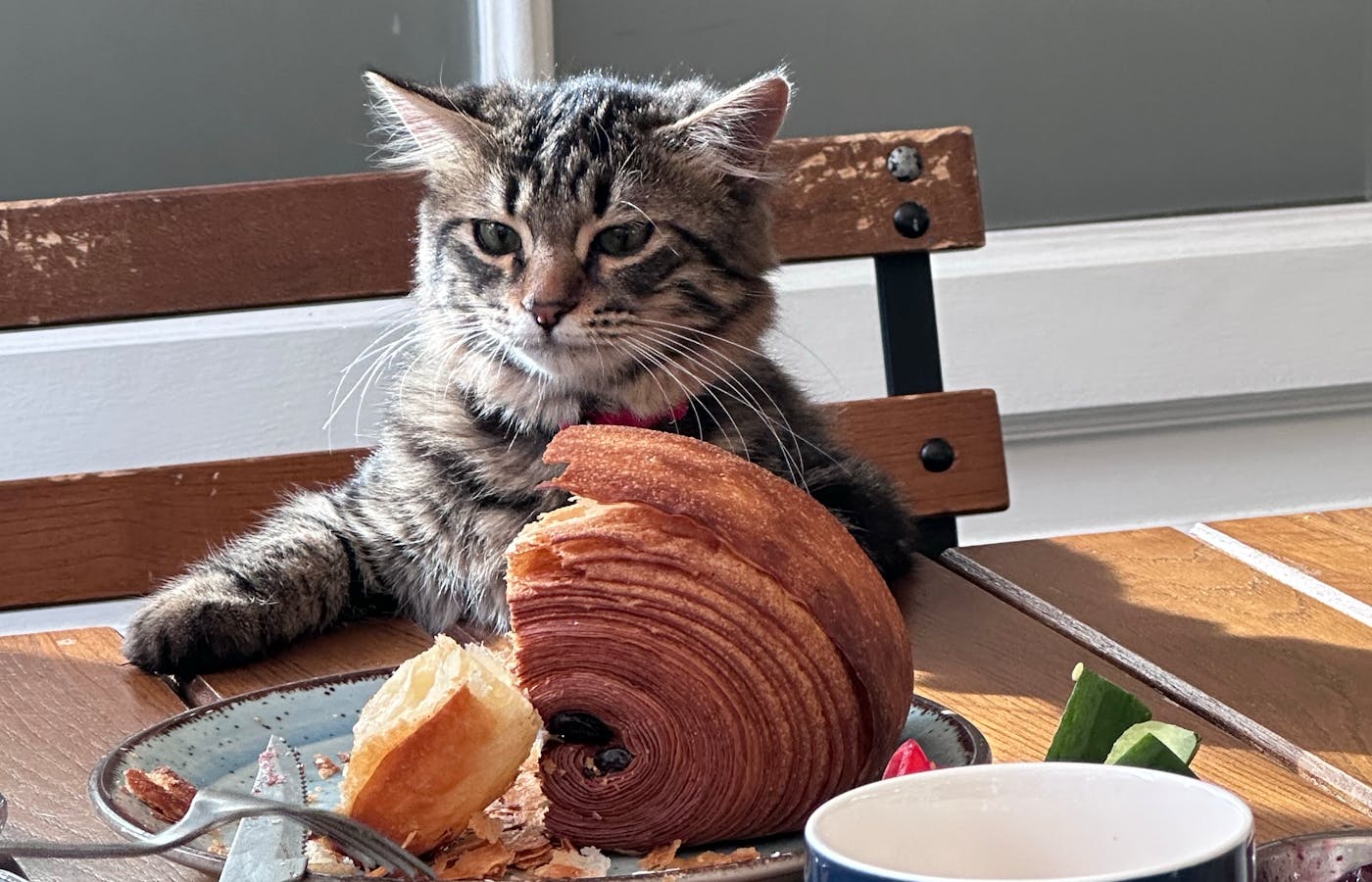
A cat pushing a pen, cup, remote, or plant pot off the edge can feel oddly deliberate. The cat watches, taps once, waits, taps again, and then the object drops. It is easy to read that as mischief, but most of the time the behavior has a simpler explanation.
If you are wondering why your cat knocks things over, think about curiosity, movement, attention, play, and access. A small object on a table is interesting because it moves when touched, makes sound when it falls, and often brings a person running into the room.
The goal is not to prove that your cat is being difficult. The goal is to understand what the behavior gives the cat, then change the setup so safer choices are easier.
Start with normal cat curiosity
Cats explore with their paws. A light tap can tell them whether an object moves, rolls, rattles, smells interesting, or might act like prey. A cup, hair tie, pen, key, or bottle cap is not just clutter from a cat’s point of view. It is a small object that responds.
This is especially common with young cats and cats that enjoy interactive play. If an item slides, wobbles, or makes a sound, it becomes more rewarding. The fall itself may be part of the fun because it creates sudden motion and noise.
Curiosity does not mean the behavior should be ignored. It means the first fix is usually environmental. Remove the most fragile objects, offer better things to investigate, and stop leaving high-value targets right at the edge of tables, counters, and shelves.
Notice whether knocking things over gets attention
Sometimes a cat learns that knocking something over is a fast way to make people react. If every dropped item leads to talking, chasing, feeding, or picking the cat up, the behavior may become part of the cat’s communication toolkit.
Pay attention to timing. Does it happen when you are working, sleeping, cooking, or looking at your phone? Does the cat knock things down near mealtime? Does it happen right before play usually starts? The pattern often reveals whether the object is the real interest or the reaction is.
This does not mean you should ignore safety. If glass, medication, candles, or hot drinks are involved, protect the cat first. But for harmless items, a calm response helps. Quietly remove the object, avoid a dramatic reaction, and offer attention when the cat is doing something you prefer.
Check whether your cat needs more active play
Object knocking can come from unused energy. Indoor cats still need chances to stalk, chase, pounce, grab, and watch movement. If the day is too predictable, a small object on a counter may become the most exciting thing in the room.
Try short play sessions before the usual problem times. A wand toy, rolling ball, crinkle toy, treat puzzle, or safe tossing toy can give the cat motion without using your breakable items as entertainment. The best play often ends with a small catch, snack, or meal so the sequence feels complete.
- Offer movement toys before the cat starts searching shelves.
- Rotate toys so the same ones do not become invisible.
- Use puzzle feeders for food-motivated cats.
- Put safe rolling toys on the floor, not on counters.
- End play before the cat becomes overstimulated.
Move risky objects away from cat traffic routes
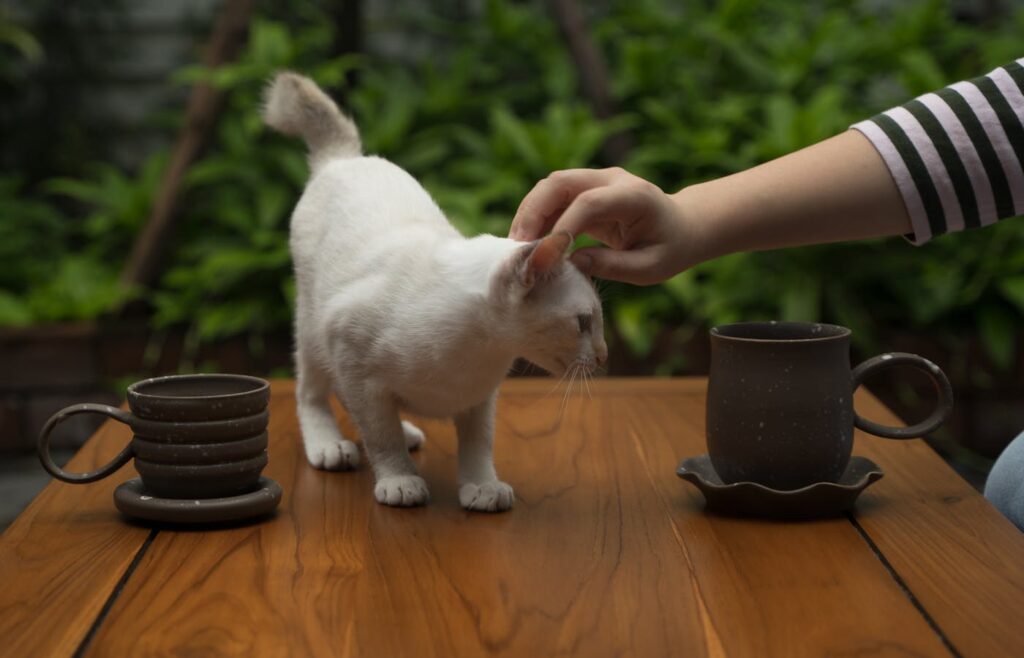
Many items fall because they sit in the cat’s normal path. Cats use tables, window ledges, nightstands, shelves, desks, and counters as routes, lookout points, and resting places. If those surfaces are crowded, the cat may step through objects or test them simply because they are in the way.
Clear narrow ledges and high-traffic surfaces first. Move glasses, candles, vases, small electronics, keys, and medication into closed storage or trays with raised edges. A nightstand with one lamp and one stable dish is safer than a nightstand covered in loose objects.
In many homes, the easiest cat behavior fix is boring: leave fewer tempting things on the edge. It is not as satisfying as training, but it prevents a lot of broken objects and stress.
Give your cat better places to climb and watch
If your cat keeps visiting counters and shelves, the issue may be height. Cats often want a view of the room, a sunny spot, or a place where people and activity are easy to monitor. Removing one surface without offering another can turn the behavior into a repeating battle.
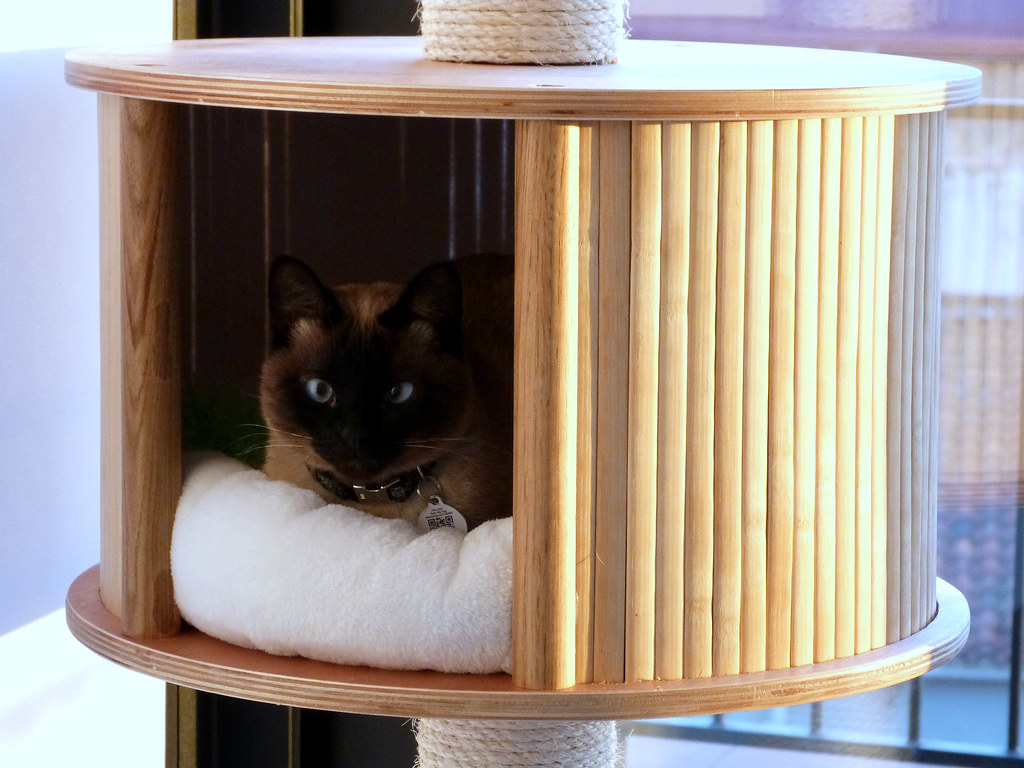
Offer a cat tree, window perch, cleared shelf, sturdy cabinet top, or safe chair near the action. The replacement spot should feel useful to the cat, not just convenient for you. If the cat wants to watch you cook, a perch near the kitchen may work better than a tower in a quiet room no one uses.
Reward the approved spot with treats, petting, or play when the cat chooses it. The point is to make the better location more rewarding than the crowded table.
Redirect the behavior without punishment
Punishment often teaches a cat to avoid the person, not the behavior. Yelling, spraying water, or startling the cat may create stress and can make the cat more secretive. A better plan is to remove the payoff and guide the cat toward something safer.
Use a simple redirection routine:
- Move fragile or dangerous objects out of reach before the usual problem time.
- Offer a short play session or puzzle feeder.
- Keep your reaction calm if a harmless object falls.
- Guide the cat to a perch, mat, or toy area.
- Reward the cat when it uses the approved spot.
- Repeat the routine for several days before judging it.
The routine matters because cats learn patterns. If the counter stops being interesting and the perch becomes rewarding, the behavior has a better path to fade.
Know when object knocking may signal stress
Most object knocking is normal curiosity, attention seeking, or play. Still, a sudden behavior change deserves a closer look. If your cat recently started knocking things over along with hiding, appetite changes, litter box changes, aggression, restlessness, or unusual vocalizing, consider stress or health discomfort.
Changes in the home can also matter. A new pet, new baby, moved furniture, different work schedule, loud construction, or fewer play sessions can push a cat to seek control or attention in new ways. The object falling may be the visible part of a larger routine change.
Behavior is information before it is a problem to correct.
If the change feels sudden or comes with other warning signs, contact a veterinarian or a qualified behavior professional. It is better to rule out discomfort than to assume the cat is simply being dramatic.
Make the home easier for a curious cat
You do not have to keep every surface empty forever. The realistic goal is to remove fragile temptations, give the cat better outlets, and respond in a way that does not accidentally turn dropped objects into a game.
Start with the places where the most damage happens. Move breakables, add a perch, schedule short play before the usual problem time, and keep your reaction calm when harmless objects fall. That is often enough to change the pattern without making the home feel like a storage locker.
- Protect glass, candles, medication, and hot drinks first.
- Use trays or closed storage for small loose items.
- Keep shelves and nightstands less crowded.
- Give your cat legal objects to bat, chase, and drop.
- Reward calm use of approved perches and play areas.
When your cat knocks things over, the behavior is usually saying something about curiosity, energy, attention, or the layout of the room. Change the environment first, then build better routines around play and safe climbing. The fewer rewards the old habit gets, the easier it is for the cat to choose something better.