How to Stop a Cat from Scratching Furniture
Scratching furniture is frustrating, but it is not a cat being rude. Scratching stretches the body, removes outer nail layers, leaves scent, marks familiar territory, and gives a cat something physical to do. The goal is not to stop scratching completely. The goal is to move the scratching to places that make sense for both the cat and the home.
That distinction matters because veterinary behavior guidance from groups such as the AVMA treats scratching as a normal welfare need, not a habit to punish away. A plan that removes every outlet can make the home neater for a week and worse for the cat long term.
When I think about how to stop a cat from scratching furniture, I start with one question: what is the furniture giving the cat that the scratching post is not? The answer is usually location, stability, texture, height, habit, or attention. Fix those parts and the cat has a better reason to choose the legal surface.
Understand why the cat is choosing the furniture
A sofa arm is often attractive because it is tall, stable, textured, and placed where family life happens. Many store-bought scratchers fail because they are too short, too light, hidden in a corner, or covered in a texture the cat does not like. From the cat’s point of view, the furniture may simply be the better tool.
Notice when scratching happens. Some cats scratch after waking, before play, after eating, when people come home, or near windows and doorways. Others scratch when excited or stressed. The timing tells you where a replacement surface should go and what reward might work.
Scratching is normal cat behavior. Treat it as a redirection problem, not a character problem. When the setup changes calmly, the cat can learn a new pattern without fear becoming part of the furniture habit.
Put the scratching post beside the problem spot first
The biggest beginner mistake is placing a new post where it looks nice instead of where the cat already scratches. If the cat uses the couch arm, put the post beside that couch arm. If the cat scratches a rug near the hallway, put a horizontal scratcher nearby. Location matters more than decor during the first stage.
Once the cat uses the new surface reliably, you can move it a little at a time if needed. Move it slowly, not across the room overnight. If the old furniture spot becomes attractive again, the post probably moved too far or too soon.
Meet the habit where it already lives. After the cat understands the new option, then you can think about the final placement.

Choose scratching surfaces that match the cat’s style
Cats have preferences. Some love vertical sisal posts. Some prefer cardboard pads. Some like carpet, wood, woven textures, or angled scratchers. Watch how your cat scratches furniture. If they stretch upward on a sofa arm, choose a tall vertical post. If they scratch rugs, choose a horizontal pad or low scratcher.
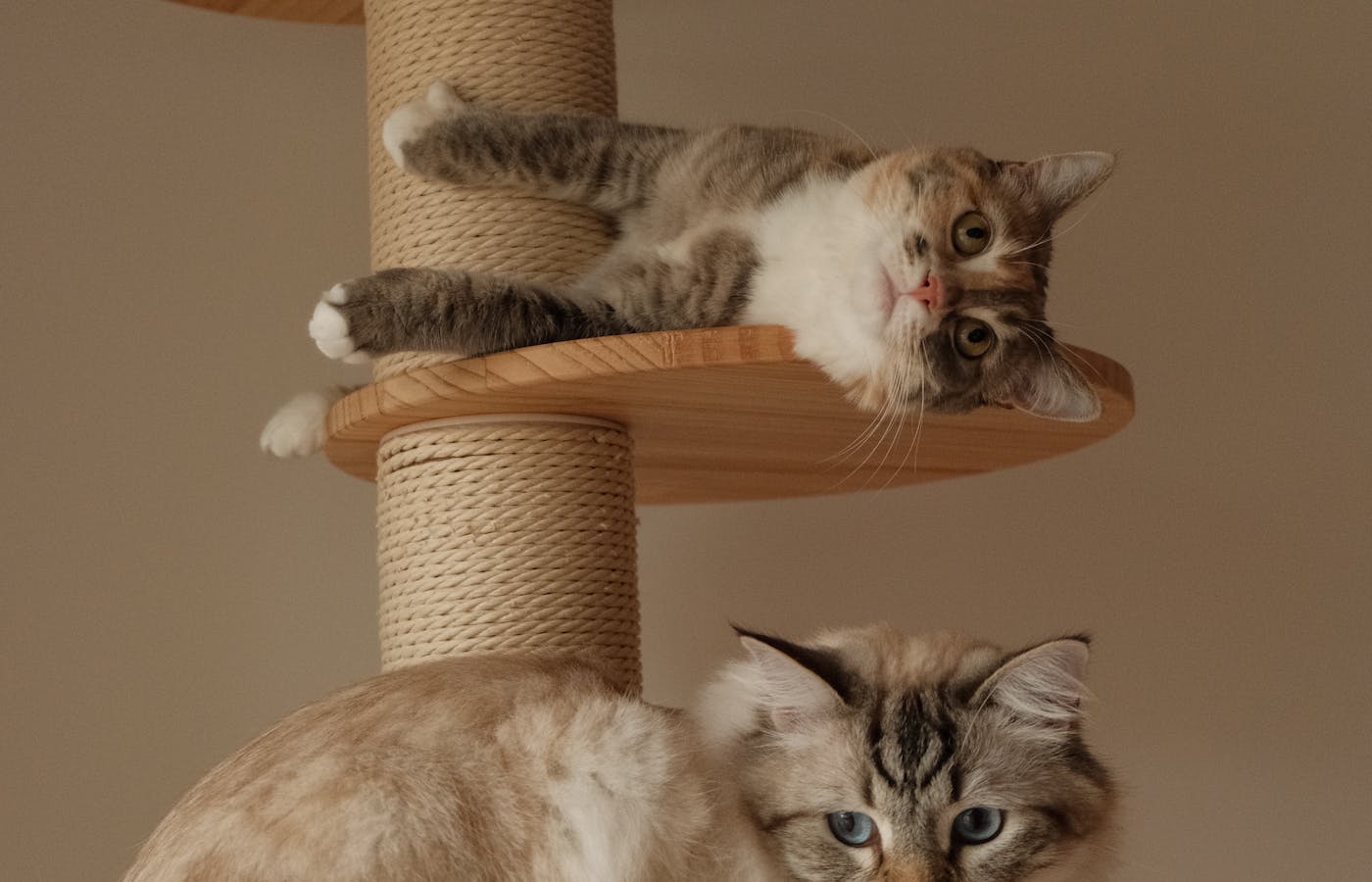
The scratcher should be stable. A wobbly post can scare a cat or make the furniture feel safer. The post should also be tall enough for a full stretch. Many cats want to extend their shoulders and back while scratching, so a short post may not satisfy the need.
For many adult cats, a vertical post needs to be tall enough for a full body stretch, often closer to 30 inches than the tiny kitten posts sold in starter kits. The base should not slide when the cat pulls against it. If you can tip it with one hand, the cat may not trust it.
Offer two textures if you are unsure. Put one vertical post and one cardboard or horizontal scratcher near the problem area. The cat’s choice will teach you faster than guessing from product photos.
Make the furniture less rewarding for a while
While the new scratcher becomes familiar, protect the furniture temporarily. Use furniture-safe covers, tightly tucked blankets, sticky-style deterrent sheets made for furniture, or another barrier that changes the texture. Avoid anything that could trap claws, damage fabric, or create a chewing hazard.
Temporary furniture protection helps when it changes the payoff. Make the furniture less satisfying while the correct surface becomes easier and more rewarding. If the couch still feels better than the post, the habit will keep returning.
Clean the scratched area if scent marking may be part of the pattern. Use a product safe for the furniture material and let it dry fully. Then place the better scratching option close enough that the cat does not have to search for it.
If the furniture is fabric, test any cleaner or deterrent on a hidden spot first. Some sprays stain upholstery or leave a smell that bothers people more than cats. I would rather use a plain physical barrier for two weeks than create a new cleaning problem on an expensive sofa.
Reward the cat for using the right scratcher
When the cat scratches the post, reward quickly. Use praise, treats, play, or gentle attention if the cat enjoys it. Some cats prefer a short play session near the scratcher. Others like a small treat placed nearby after they use it. The reward should feel calm and immediate.
You can also make the post more interesting with catnip or silvervine if your cat responds to it. Rub a little on the scratcher, place toys near it, or play with a wand toy around the area. Do not force the cat’s paws onto the post. That can make the surface feel unpleasant. When scratching looks tied to stress instead of normal stretching, beginner cat body-language can help separate normal communication from discomfort.
A cat may only touch the new scratcher at first. Reward tiny steps: sniffing it, leaning on it, stretching near it, or giving one short scratch. Those early moments are how the habit begins.
- Place the scratcher beside the furniture spot.
- Make the furniture texture less satisfying.
- Invite interest with play, treats, or catnip.
- Reward any use of the correct surface.
- Move the scratcher only after the habit is steady.
Keep nails trimmed so damage is easier to manage
Nail trimming does not remove the need to scratch, but it can reduce damage while training the new habit. Trim only the sharp tips if you know how to do it safely. Use proper cat nail clippers and avoid the quick, the sensitive part inside the nail. If you are unsure, ask a veterinarian, groomer, or experienced handler to show you.
Go slowly. Some cats need one or two nails trimmed at a time with breaks. Pair the routine with treats or calm handling. A stressful nail session can make the cat avoid hands, laps, or grooming later, so patience matters more than finishing every nail at once.
Nail caps may be an option for some cats, but they need correct application and monitoring. They are not a replacement for scratching surfaces. The cat still needs acceptable places to stretch and scratch.
Avoid punishment that makes scratching harder to fix
Yelling, spraying water, hitting, or scaring a cat may interrupt the moment, but it often creates a new problem. The cat may learn to scratch when you are not watching, avoid you, or feel more stressed. Stress can increase unwanted behavior instead of reducing it.
If you catch the cat scratching furniture, calmly redirect. Use a toy, sound, or gentle movement toward the correct scratcher, then reward when the cat engages with it. If the cat keeps returning to the sofa, the setup still needs work: better placement, better texture, stronger furniture protection, or more reward.
Think like a designer, not a referee. Change the environment so the right choice is easier than the wrong one. That mindset also keeps the home calmer for everyone, because you are solving the cause instead of reacting to every scratch mark after it happens.
Watch for stress, boredom, or too few outlets
Scratching can increase when a cat is bored, anxious, under-stimulated, or dealing with household changes. A new pet, moved furniture, visitors, outdoor cats at the window, schedule changes, or lack of play can all affect scratching. If the cat has only one scratcher in a busy home, that may not be enough.
Add enrichment where it fits: daily play, window perches, climbing space, puzzle feeders, resting spots, and multiple scratchers in different areas. Cats often scratch in social zones, not just hidden corners. A post in the room where people spend time may work better than one tucked away.
- Place scratchers near sleeping spots and busy rooms.
- Offer vertical and horizontal options.
- Use play to release energy before trouble patterns appear.
- Protect furniture during the habit change.
- Ask a vet if scratching changes suddenly with other behavior signs.
Adjust the plan if the cat ignores the post
If the cat ignores the post, do not assume the cat is stubborn. Change one variable at a time. Try a taller post, a heavier base, a different texture, a new location, or a horizontal scratcher. Put the scratcher directly in the path the cat already uses, not across the room.
Also check whether the furniture is still too rewarding. If the couch arm remains uncovered, stable, textured, and central, it may keep winning. The replacement surface has to compete fairly. For a few weeks, the home may look a little less polished while the new habit forms.
Stopping a cat from scratching furniture is a redirection process: understand the habit, place a better surface nearby, protect the furniture, reward the right choice, trim nails carefully, and keep enough outlets in the home. The furniture improves when the cat has a better job to do.