Why Does My Cat Zoom Around the House?
A cat can spend half the afternoon looking sleepy, then suddenly sprint through the hallway like the floor changed rules. For a new cat owner, that burst can look funny, confusing, or a little worrying if it happens late at night.
If you are asking why does my cat zoom around the house, the answer is often normal energy release. Cats may race, jump, skid, chirp, or launch from room to room after rest, after using the litter box, during play windows, or when a quiet day has not given them enough hunting-style activity.
Most cat zoomies are normal, but the pattern matters. Watch when they happen, what starts them, how quickly your cat settles, and whether anything else about eating, litter box use, movement, or mood has changed.
Recognize normal cat zoomies before worrying
Normal zoomies are short bursts of movement that end with the cat returning to ordinary behavior. A cat may sprint down a hallway, leap onto furniture, chase an invisible target, skid around a corner, or pause with wide eyes before running again. The burst often looks dramatic, but the cat usually seems alert, coordinated, and playful.
Young cats and indoor cats may show zoomies more often because they have energy to spend. Cats are also naturally active around dawn and dusk, which can make evening or early morning sprints more common. A cat that sleeps while the household is busy may wake up ready to move right when people want quiet.
The key question is whether the behavior fits the cat’s normal rhythm. A familiar five-minute sprint is different from sudden frantic movement paired with hiding, limping, crying, or confusion.
Also notice where the sprint usually happens. If the route goes across a slick floor, narrow shelf, loose rug, or table with breakable items, the behavior may be normal but the path may need help. Making the route safer is often easier than trying to stop the burst completely.
Look at the timing of the zoom around the house
Timing gives useful clues. Some cats zoom after a nap because their energy comes back all at once. Some run after eating because they feel refreshed. Others sprint after using the litter box, which can be normal if they seem comfortable and return to normal quickly.
Night zoomies often happen when a cat’s schedule does not match the household. If the cat sleeps most of the day and gets little play, the evening can become the main activity window. That does not mean the cat is trying to be difficult. It may simply be awake and under-stimulated.
Keep a short note for a few days: time, trigger, length, and what happened afterward. Patterns are easier to understand when you are not guessing from one noisy moment.
Give indoor cats a way to spend hunting energy
Indoor cats still need chances to stalk, chase, pounce, climb, scratch, and finish a play sequence. If the day offers only naps and food, the body may create its own exercise plan later. A short play routine can reduce the pressure behind random hallway sprints.
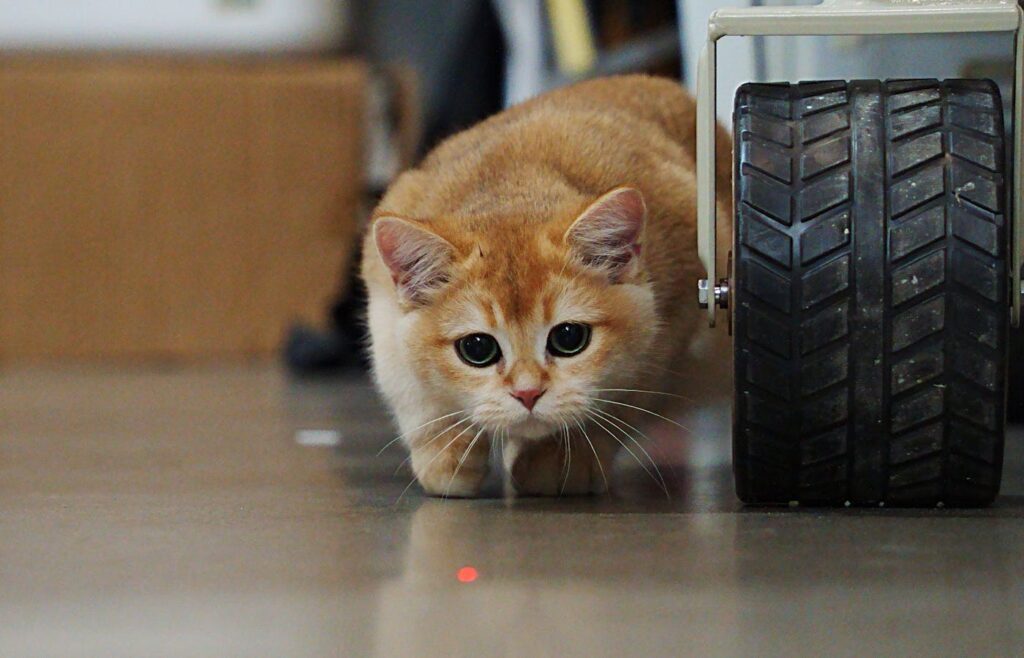
Use toys that move like prey: a wand toy, soft ball, crinkle toy, or small object tossed safely across the floor. Let the cat chase, pause, stalk, and catch. End with a small treat or meal if that fits the routine, because the catch-and-eat pattern can help some cats settle.
- Use two short play sessions instead of one exhausting session.
- Let the cat catch the toy sometimes.
- Rotate toys so they stay interesting.
- Offer scratching posts or climbing spots for extra movement.
- Put fragile items away if zoomies follow a predictable path.
Separate playful zoomies from stress signals
Zoomies can be playful, but fast movement can also appear when a cat is stressed, startled, overstimulated, or trying to escape discomfort. Look at the whole body. Playful zoomies often include loose movement, quick stops, curiosity, and recovery. Stress may show as flattened ears, tucked posture, hiding, growling, hissing, repeated escape attempts, or a cat that cannot settle afterward.
Think about what changed recently. Visitors, new pets, loud repairs, moved furniture, a different litter, a new feeding schedule, or outdoor cats near windows can all affect behavior. If zoomies appear after a specific stressor, reducing that stress may matter more than adding more play.
Do not punish the running. Punishment can make a stressed cat feel less secure and can make a playful cat more confused. Redirect with safe play, close off unsafe rooms, and make the environment easier to navigate. The same calm setup matters in reading dog body language as a beginner, where the routine has to feel predictable for the dog.
Check litter box and body clues when zoomies change
A sudden change in zooming behavior deserves a closer look. If your cat races after using the litter box but also strains, cries, visits the box often, avoids the box, or leaves unusual urine or stool, call a veterinarian. The running may be tied to discomfort rather than excitement.
Watch movement too. Limping, stiffness, falling, weakness, sudden aggression when touched, excessive grooming, hiding, appetite changes, or confusion are not typical playful zoomies. Older cats may have changes in vision, hearing, pain, or medical conditions that affect nighttime activity.
Use the pattern, not one sprint, to decide how concerned to be. A happy cat racing after a nap is usually different from a cat that suddenly seems restless, painful, or unable to calm down.
Zoomies are usually a behavior question, but sudden changes can become a health question.
Make the evening routine easier for a high-energy cat
If zoomies happen most nights, adjust the evening before the sprint starts. A predictable routine can help: play, food, litter box access, quieter lighting, and safe paths through the home. The goal is not to erase your cat’s personality. It is to give the energy somewhere better to go.
Keep the play active enough to matter but not so intense that the cat becomes overstimulated. Some cats need chase games. Others need puzzle feeders, climbing, or a window perch during the day. If the cat is bored all afternoon, a single late-night play session may not carry the whole routine.
- Play for ten minutes before the usual zoomie time.
- Let the cat catch the toy at the end.
- Offer dinner or a small snack afterward.
- Clear the usual running path of breakable items.
- Keep the bedroom door routine consistent.
Know when cat zoomies need professional help
Call a veterinarian if the zoomies are sudden, extreme, paired with pain signs, tied to litter box trouble, or happening with appetite changes, weight change, vomiting, confusion, weakness, or unusual vocalizing. Behavior that looks silly from across the room can still be connected to discomfort.
A behavior professional may help when the cat is healthy but the running is tied to fear, conflict with another pet, redirected aggression, or stress around household routines. That kind of support is especially useful when people are getting scratched, the cat is hiding afterward, or the home has become tense around predictable zoomie times.
- Normal: short bursts, playful body, quick recovery.
- Watch closely: new timing, longer bursts, more agitation.
- Call a vet: pain, litter box changes, appetite changes, confusion, or weakness.
- Adjust the home: safe paths, play outlets, climbing spots, and predictable evenings.
Most cats zoom because their bodies are built for bursts of movement. Give that energy a safe route, notice the timing, and treat sudden changes with respect. The more you understand the pattern, the less mysterious the hallway sprint becomes.